



NEWS&EVENTS
Home > News&Events > Company news > What special requirements does the material of copper extraction equipment usually need to meet?
In the field of copper hydrometallurgy and nonferrous metal separation, the material selection of extraction equipment directly determines process stability, product purity and equipment life. In view of the highly corrosive media characteristics of the copper extraction system, the equipment material must meet the following core requirements:
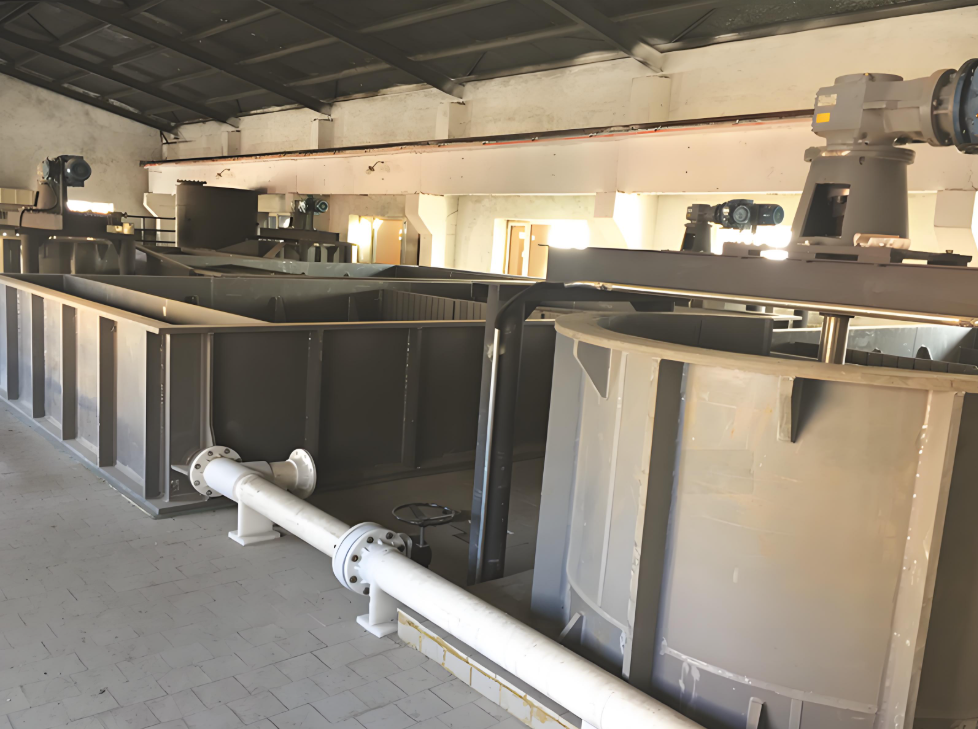
Resistance to sulfuric acid corrosion
Copper hydrometallurgy begins with heap leaching, where dilute sulfuric acid dissolves the copper ions in the ore to form an acidic leachate. This solution has a low pH and contains high concentrations of sulfuric acid and other metal ions, making it highly corrosive. Extraction equipment, such as mixing and settling tanks and pumps, is exposed to this acidic leachate for extended periods. If the material is not suitable, the equipment will corrode rapidly, leading to wall thinning and perforation, resulting in equipment damage and electrolyte leakage. Furthermore, the leaching of metallic impurities can contaminate the process flow and affect the quality of the cathode copper. Therefore, the material must be able to form a stable, dense passivation film on the surface to resist sulfuric acid attack.
Anti-swelling ability of organic solvents
The extraction process uses organic extractants to selectively capture and transfer copper ions. However, organic extractants and their diluents can penetrate and dissolve many polymer materials. If the equipment uses inappropriate polymer linings, organic solvents can penetrate and cause the material to swell, leading to seal failure, component deformation and cracking, and potentially leaks and cross-contamination, compromising extraction and separation.
Therefore, in the copper extraction process, the material selection for copper extraction equipment must address both of these stringent requirements. It's more than just a container material; it serves as a guardian of the entire process chain. Only materials that successfully withstand the "double test" of acidity and organic phases can ensure efficient and stable operation of the copper extraction plant, thereby achieving the optimal balance between resource utilization and economic benefits.