



NEWS&EVENTS
Home > News&Events > Company news > From Slag Formation to Copper Production: Horizontal Converting Furnace (P-S Converter) Technology
In copper smelting operations, the horizontal converter (P-S converter) occupies an irreplaceable and pivotal position. It serves as the critical equipment for further refining copper matte into blister copper; thanks to its unique design and highly efficient autogenous smelting mechanism, it has become the industry's gold standard.
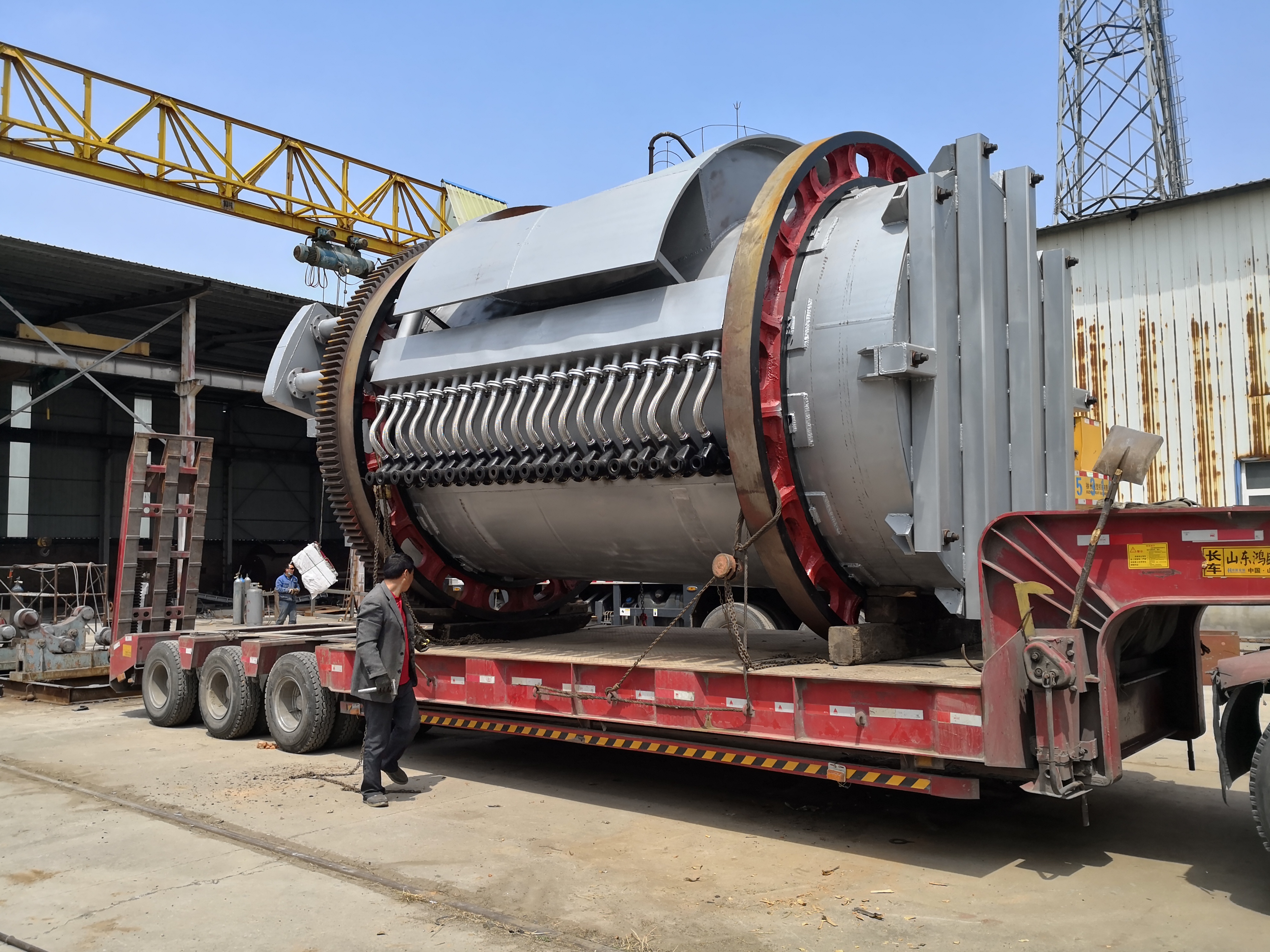
Equipment Structure: A Precisely Engineered Industrial Vessel
The shell of the horizontal converter is constructed from steel plates 4 to 5 centimeters thick, lined internally with high-temperature-resistant and corrosion-resistant refractory bricks—specifically magnesia, magnesia-chrome, or chrome-magnesia bricks. An opening is situated in the central section of the furnace body, serving multiple functions: charging materials, exhausting flue gas, tapping slag, and tapping copper. Along one side of the furnace body, a row of tuyeres is arranged horizontally to facilitate the injection of compressed air. The entire furnace body is mounted on support rollers, allowing it to rotate in a forward direction around a horizontal axis, thereby facilitating ease of operation and maintenance.
The Converting Process: Two Stages of Precise Control
The converting process is divided into two distinct phases: the slag-forming stage and the copper-making stage. During the slag-forming stage, air is blown into the copper matte while quartz flux is added; this oxidizes the iron present to form FeO, which then combines with SiO₂ to create an iron silicate slag. The reaction temperature during this phase is strictly controlled within the range of 1200°C to 1250°C. In the copper-making stage, the oxidation of white metal (Cu₂S) continues, resulting in the production of blister copper. The final blister copper product possesses excellent quality, with a sulfur content of less than 0.05%.
Process Advantages: Autogenous, Efficient, Flexible, and Reliable
This type of furnace requires no external fuel; it relies entirely on the exothermic oxidation reactions of the iron and sulfur within the copper matte to generate all the necessary thermal energy, resulting in exceptionally high thermal efficiency. Furthermore, the operation is highly flexible, demonstrating strong adaptability to raw materials of varying grades, and the equipment is easy to maintain.
As a mature and established technology, the horizontal converter is poised to undergo continuous optimization in the future, advancing toward intelligent control systems and lower emission levels, thereby contributing to the green and efficient development of the copper smelting industry.