



NEWS&EVENTS
Home > News&Events > Company news > Common Materials for Electrolytic Copper Electrolysis Cells: Advantages and Disadvantages
Electrolysis cells are core equipment for electrolytic copper production. The material of the copper electrolysis cell directly affects service life, production stability and overall investment cost. Three mainstream types are widely adopted in the industry: FRP fiberglass reinforced plastic cells, rubber-lined reinforced concrete cells, and PP/PVC plastic electrolytic copper tanks for copper electrowinning lines.
FRP electrolysis cells are the most popular option in electrolytic copper plants. They feature excellent resistance to sulfuric acid corrosion, light weight and outstanding insulation performance, which effectively reduce electric leakage loss. FRP can be custom fabricated into various sizes to fit medium and large-scale production lines. It delivers stable long-term performance with low maintenance requirements and favorable overall cost performance.
Rubber-lined reinforced concrete electrolysis cells have low initial cost and high structural rigidity. However, their anti-corrosion performance fully relies on the rubber lining. Under long-term exposure to electrolyte and temperature cycles, the rubber liner tends to age and crack. Once damaged, sulfuric electrolyte leaks easily and erodes the concrete base. Repair and leakage treatment become difficult, and maintenance costs rise gradually over time.
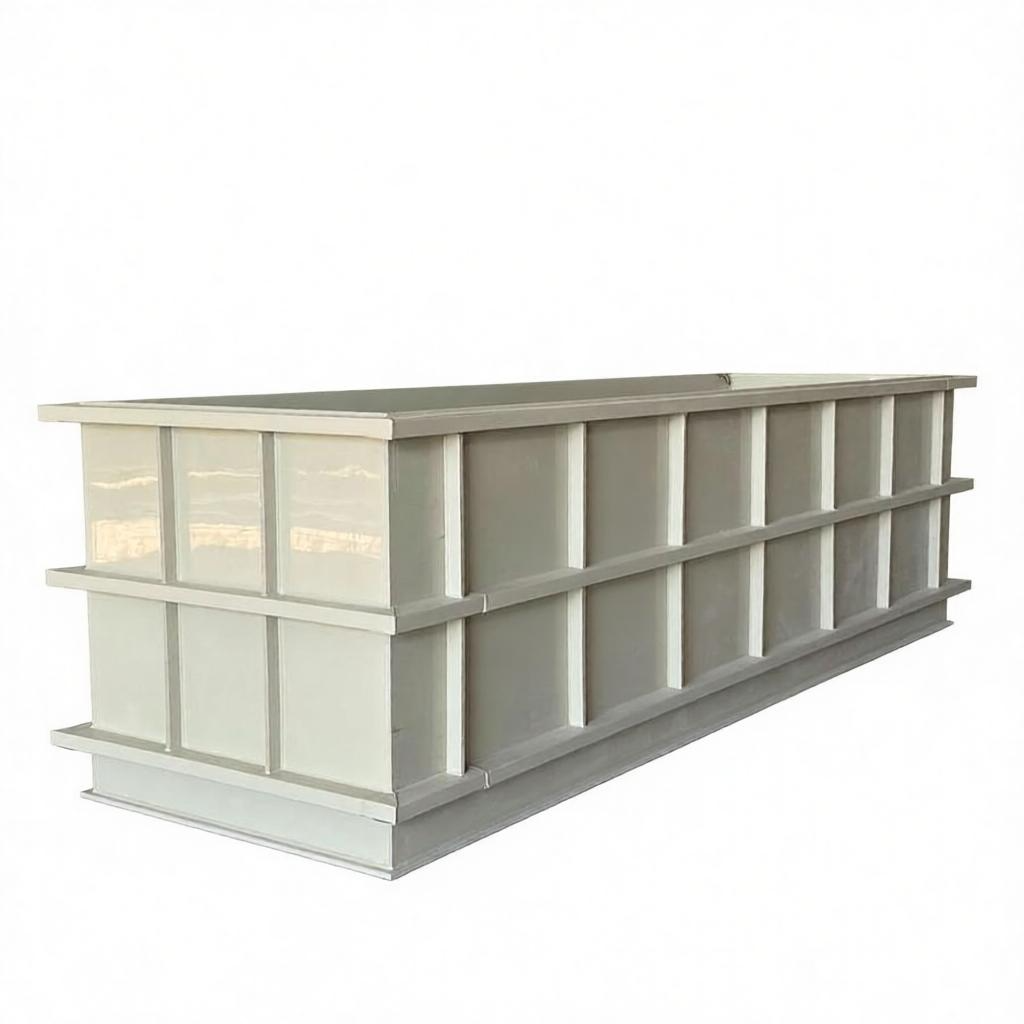
PP and PVC plastic electrolytic copper tanks offer good corrosion resistance and easy fabrication. They work well for laboratory tests and small-capacity electrolytic copper production. Nevertheless, PP and PVC lack sufficient rigidity. Large-sized tanks will deform under pressure and heat, and weld seams carry leakage risks. They are not suitable for large continuous industrial production.
Manufacturers should select electrolysis cell materials according to production capacity, budget and maintenance plans.