



NEWS&EVENTS
Home > News&Events > Company news > What factors should be considered in the size design of antimony electrolytic cell?
As a professional manufacturer in the field of antimony electrolysis equipment, we deeply understand the core position of electrolytic cell size design in the entire process of antimony ore processing. The rationality of its design is directly related to key indicators such as production efficiency, product quality and operating costs.
Production scale directly impacts electrolytic cell demand. Large-scale production requires a larger electrolytic area. For example, a large antimony ore processing plant, with an annual output of thousands of tons of refined antimony, must have a significantly larger electrolytic cell volume than a small plant with an annual output of only tens of tons, ensuring sufficient space for electrode placement to meet production requirements.
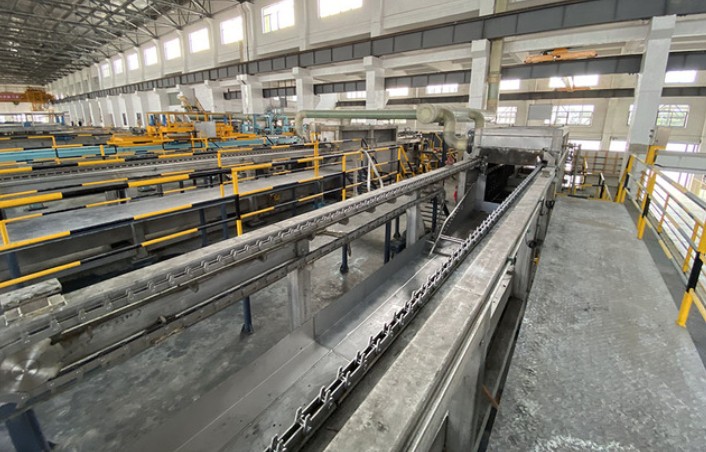
Regarding electrolyte circulation, a suitable electrolytic cell length, width, and height ratio is crucial for uniform electrolyte flow, preventing short circuits and ensuring uniform ion exchange, thereby improving electrolysis efficiency and product quality. Furthermore, a reasonable size design promotes electrolyte turbulence and enhances ion exchange efficiency.
When it comes to electrode arrangement, the spacing between electrodes must balance electrolysis efficiency with energy consumption and failure rate. The appropriate spacing must be determined through experimentation and production practice. Furthermore, the size of the electrolytic cell must be designed to facilitate electrode installation and maintenance, leaving ample space to reduce maintenance costs and time.
Equipment footprint is also crucial. We optimize the electrolytic cell structure and layout, such as adopting multi-layer or compact designs to reduce floor space. We also consider the spacing between cells and their integration with other equipment to ensure a smooth production process.
We offer customized solutions for processing plants of varying sizes. Small processing plants prioritize compactness and flexibility, employing single or multiple electrolytic cells in series. Larger processing plants favor large electrolytic cells equipped with comprehensive electrolyte circulation and temperature control systems, as well as advanced automation technology, to enhance production efficiency and economic benefits.