



NEWS&EVENTS
Home > News&Events > Company news > Composition of antimony trioxide electrolytic refining equipment
In the refining process of antimony trioxide, a complete and efficient electrolytic refining system is crucial for ensuring product quality and production efficiency. Antimony trioxide electrolytic refining equipment mainly consists of the following parts:
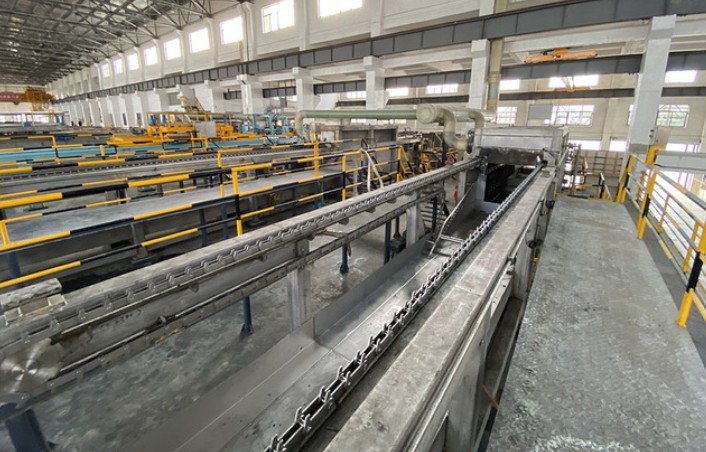
Diaphragm Electrolytic Cell: As a core component of the process, its role is crucial. The diaphragm separates the crude antimony anode and cathode, effectively preventing impurities from depositing along with the refined antimony, thus ensuring refining quality. In terms of materials, the main body of the electrolytic cell is generally made of corrosion-resistant polypropylene, reinforced with stainless steel to enhance the durability and stability of the equipment, enabling it to withstand the complex chemical environment and physical conditions during electrolysis.
Rectifier: During electrolysis, a stable voltage and current are required to drive the reaction. The function of the rectifier is to convert alternating current (AC) into direct current (DC), providing stable and reliable power support for electrolysis and ensuring that the electrolysis process can proceed smoothly according to predetermined parameters.
Agitator: Installed inside the electrolytic cell, it continuously stirs the slurry during electrolysis. This operation ensures uniform mixing of the slurry, avoids localized concentration differences, and guarantees efficient and stable electrolytic reactions in all areas, thereby improving refining efficiency.
Plate and frame filter press: After electrolysis, a solid-liquid mixture is produced. The plate and frame filter press can separate the solid and liquid, discharge the waste residue, and recycle the electrolyte for reuse. This not only cleans up the waste residue but also saves resources and reduces production costs.
These devices work together in a coordinated manner to form a complete system for the electrolytic refining of antimony trioxide, providing a solid guarantee for the production of high-quality antimony trioxide products and driving the continuous development of related industries.