



NEWS&EVENTS
Home > News&Events > Company news > Refractory Selection, Operation, and Maintenance for Horizontal Blowing Furnaces
Furnace campaign life is a critical indicator of economic efficiency for copper smelting enterprises. Refractory consumption in P-S converters accounts for the largest share of costs in the pyrometallurgy of heavy non-ferrous metals; resolving issues related to refractory service life can significantly reduce costs and unlock production potential.
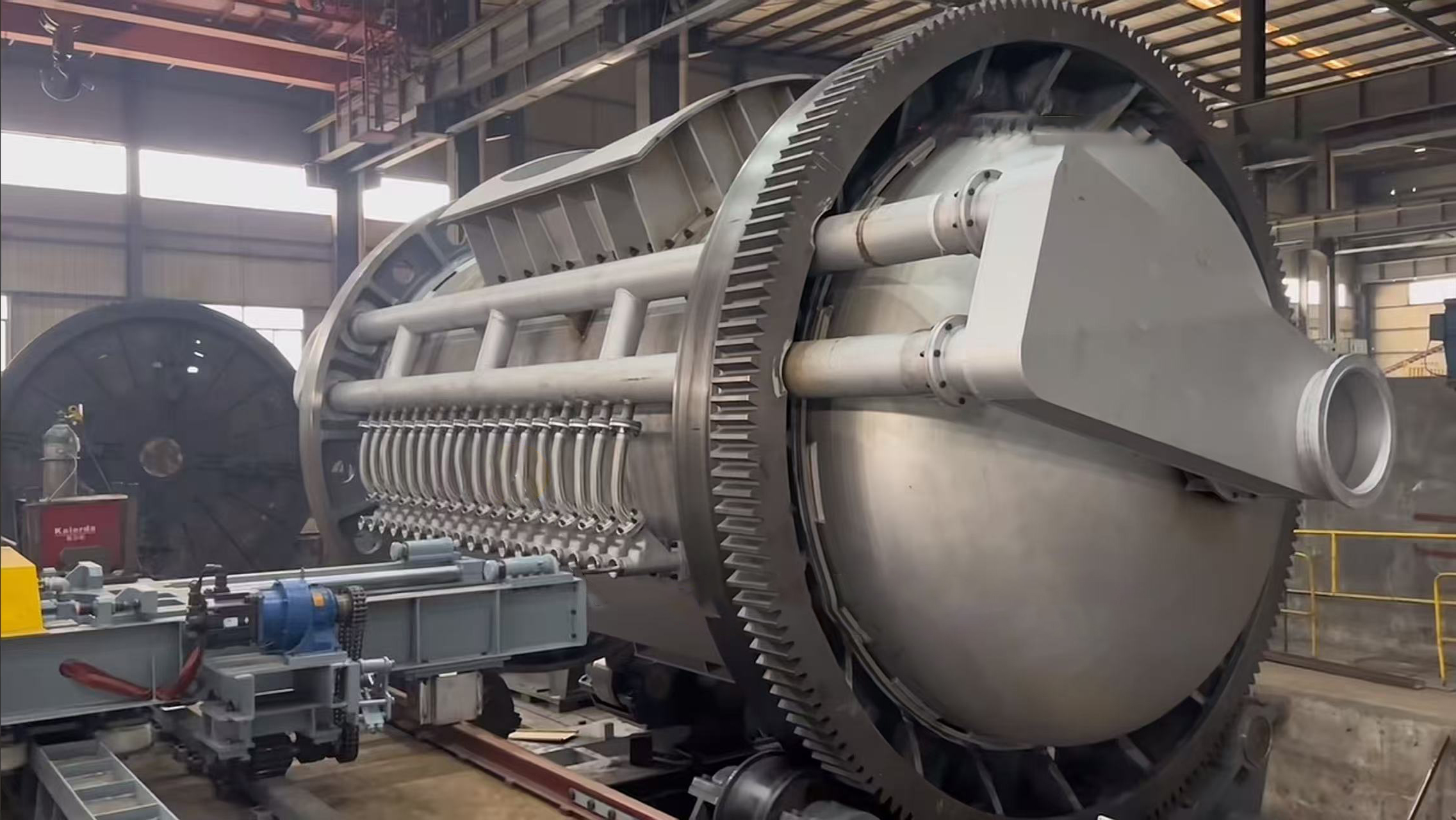
Mechanisms of Refractory Degradation
Lining wear in horizontal converters is the result of the synergistic interaction of chemical erosion, thermal stress, and mechanical abrasion. Chemical erosion is the primary factor: SiO₂ in the slag reacts with the periclase phase in magnesia-chrome bricks to form forsterite, creating a deteriorated layer that leads to structural failure. Thermal stress arises from furnace cycling operations; at a temperature differential of 300°C, thermal stress can reach 25–40 MPa—exceeding the brick's structural strength—thereby triggering spalling and cracking. Mechanical abrasion encompasses erosion by the molten bath and the mechanical action of rodding the tuyeres; these three factors mutually accelerate one another, creating a vicious cycle of degradation.
Material Selection Strategies
Magnesia-chrome bricks remain the mainstream choice, offering the combined advantages of high refractoriness and strong resistance to alkaline slag erosion. For the tuyere zone, fused-reboned magnesia-chrome bricks (characterized by higher Cr₂O₃ and Al₂O₃ content and lower porosity) are recommended, while directly bonded magnesia-chrome bricks are suitable for other sections of the furnace lining.
Key Points for Operation and Maintenance
Establish a routine lining inspection system to ensure the timely replacement of damaged refractory materials. Strictly control masonry quality (maintaining brick joints of ≤1 mm) and execute furnace drying procedures appropriately. During operation, minimize non-blowing periods, maintain blowing temperatures within the range of 1200–1300°C, prevent excessive silicon content in the bath, ensure stable airflow, and minimize temperature gradients across the furnace walls.
Extending furnace campaign life requires a shift from "passive replacement" to "proactive management." This entails a comprehensive approach combining systematic analysis of degradation mechanisms, optimization of material selection, standardization of operational and maintenance procedures, and intensified lining inspections—thereby achieving a transformative improvement in furnace longevity.