



NEWS&EVENTS
Home > News&Events > Company news > Core System Components of a Rotary Kiln for Antimony Ore Smelting
As a core piece of equipment in pyrometallurgy, the rotary kiln used for smelting antimony ore relies on the precise coordination of its various subsystems to ensure overall performance. A complete rotary kiln of this type consists of the following major core systems, which are organically integrated to collectively guarantee a continuous, stable, and efficient smelting process:
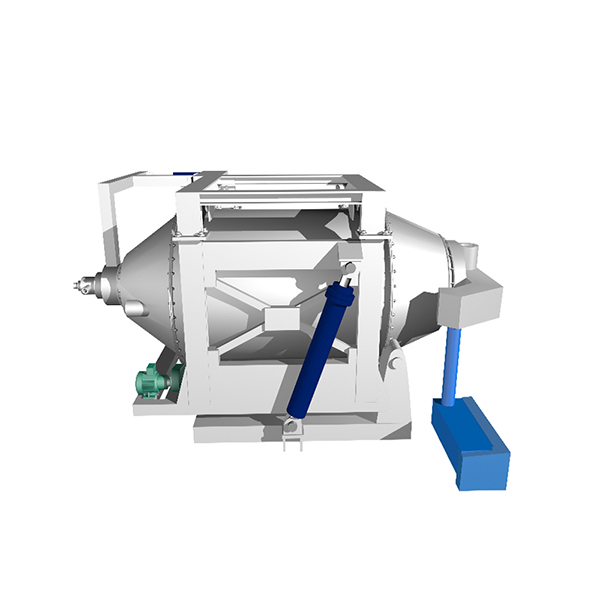
1. Kiln Body System: The kiln body consists of a cylindrical steel shell lined internally with a complex, multi-layered refractory lining. The riding rings (or tires) located at both ends of the kiln body serve as its primary structural support points; the entire kiln body rests upon supporting rollers and thrust rollers via these riding rings.
2. Drive System:Designed to handle the heavy load of the kiln body, this system typically comprises a variable-frequency motor, a reducer, and a large/small gear set. The drive system is responsible for rotating the kiln body at a preset speed and direction. Its rotational speed is generally controlled via stepless variable-frequency regulation to accommodate varying reaction requirements; for instance, standard operating speeds can be adjusted within a range of 0.5 to 1.5 revolutions per minute.
3. Combustion System: One end of the kiln body is equipped with an independent, adjustable burner capable of utilizing various fuels, such as natural gas or fuel oil. Through multi-stage temperature control technology, a precise temperature gradient can be established within the kiln to satisfy the specific thermal regime requirements of different process stages—such as oxidative volatilization and reductive smelting.
4. Sealing System: High-efficiency sealing devices are installed at the interfaces where the moving kiln body meets stationary components—specifically at the high-temperature end (kiln hood), where it interfaces with the atmosphere, and at the low-temperature end (kiln tail), where it connects to the flue gas duct.
5. Dust Collection and Flue Gas Treatment System:This system is responsible for processing the high-temperature, dust-laden flue gas generated during smelting. It typically includes an annular flue (for preliminary cooling), dust collectors (such as bag filters), and desulfurization towers, all designed to ensure that flue gas emissions meet regulatory standards while facilitating resource recovery.
Thus, it is evident that a high-performance rotary kiln for antimony ore smelting is the direct result of the synergistic cooperation of the five major systems described above, which collectively underpin the efficient and continuous smelting of antimony ore.