



NEWS&EVENTS
Home > News&Events > Company news > Application of Antimony Rotary Furnaces in the Reduction Stage of Antimony Ore Smelting
During the smelting of antimony ore, the antimony oxide—having undergone prior desulfurization and volatilization treatments—must be further reduced to metallic antimony. The rotary furnace serves as the core equipment responsible for executing this critical reduction task. Within the furnace's high-temperature and reducing atmosphere, reducing agents convert the antimony oxide into crude metallic antimony; this stage particularly embodies the very essence of "smelting."
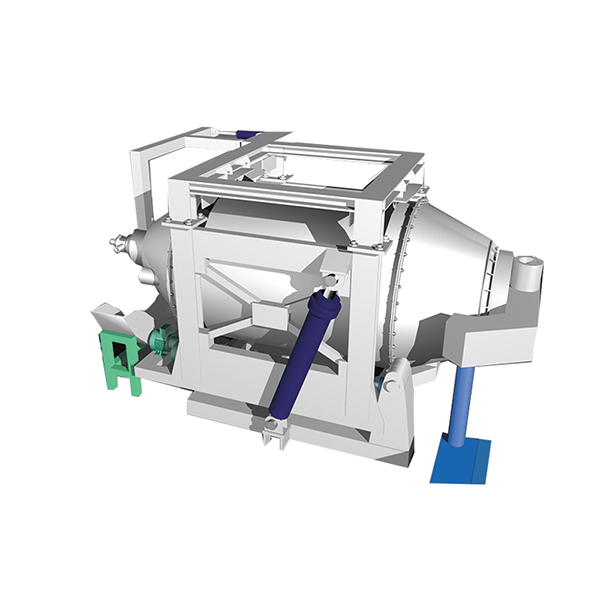
1. Process Core:Through continuous rotation, the rotary furnace ensures uniform heating of the charge material while maintaining a reducing atmosphere within the furnace. Carbonaceous reducing agents (such as pulverized coal) are utilized to reduce the antimony oxide into metallic antimony.
2. Control System: The furnace is equipped with an automated control system capable of precisely regulating the furnace body's rotation speed, temperature distribution, feed rate, and the ratio of reducing agents. By continuously monitoring the internal atmosphere and temperature, operators can adjust parameters in real-time to ensure complete reduction, minimize energy consumption, and prevent issues such as over-firing or incomplete reduction.
3. Environmental Measures: The rotary furnace smelting process generates dust-laden flue gas and small quantities of residual waste gas. These emissions must undergo purification via treatment systems—such as baghouse filtration and wet desulfurization—to meet regulatory discharge standards. Concurrently, the furnace's effective sealing and negative-pressure operation minimize the escape of fugitive dust, thereby reducing the environmental impact.
4.Recovery Benefits: In addition to the primary product—crude antimony—the rotary furnace reduction process facilitates the comprehensive recovery of associated precious metals. Elements such as gold, silver, and lead become enriched within the crude antimony during the reduction phase, allowing for their subsequent separation and purification during downstream refining processes.
In summary, the rotary furnace plays a pivotal role in the reductive smelting of antimony ore; its advanced process control, robust environmental safeguards, and multi-metal recovery capabilities provide a solid foundation for the green and efficient development of the antimony industry.