



NEWS&EVENTS
Home > News&Events > Company news > What are the core advantages of the rotary antimony refining furnace?
In the non-ferrous metal smelting sector, antimony holds a vital strategic position due to its unique flame-retardant properties and ability to strengthen alloys. Traditional stationary refining furnaces have long struggled with three major challenges: incomplete separation of antimony from slag, high costs associated with switching products, and low overall recovery rates. By utilizing dynamic furnace rotation technology, rotary antimony refining furnaces fundamentally reshape reaction kinetics; their core advantage lies in achieving breakthroughs in both process flexibility and overall recovery rates.
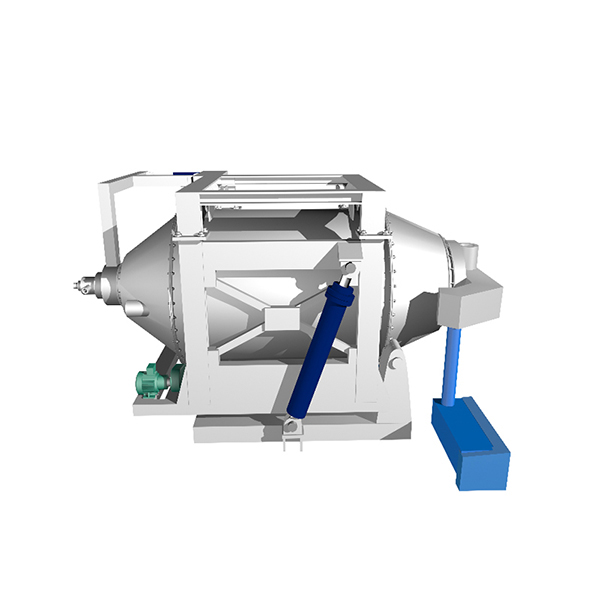
The most notable advantage of the rotary refining furnace is its flexibility in product switching. Enterprises can rapidly adjust process parameters to produce two key products without needing to replace the main equipment:
Production of antimony metal ingots: When the market demands antimony metal, the furnace temperature is maintained between 700°C and 750°C in a reducing atmosphere, with refining agents such as soda ash and niter added for deep impurity removal. Impurities are oxidized and enter the slag phase, while the purified molten antimony is cast directly into high-purity ingots.
Production of antimony trioxide (Sb₂O₃): When demand for flame retardants is high, the furnace temperature is raised to 850–950°C, and excess air is blown in. Under these conditions, the antimony metal volatilizes and oxidizes to form Sb₂O₃ vapor, which is subsequently condensed and recovered in a dust collection system, yielding high-quality raw material for flame retardants.
Through precise control of the atmosphere and temperature, combined with an efficient dust collection system, the rotary antimony refining furnace maximizes the recovery of valuable resources, offering smelting enterprises a highly competitive technical solution for navigating price fluctuations and optimizing their product mix.