



NEWS&EVENTS
Home > News&Events > Company news > Electrolytic copper equipment for producing high-purity cathodes from anodes
In modern copper smelting processes, electrolytic refining is the core stage for producing high-purity copper cathodes. Using anode plates cast from fire-refined copper as feedstock, this process employs electrochemical principles to raise copper purity from approximately 99.5% to over 99.99%, while effectively recovering precious metals such as gold and silver.
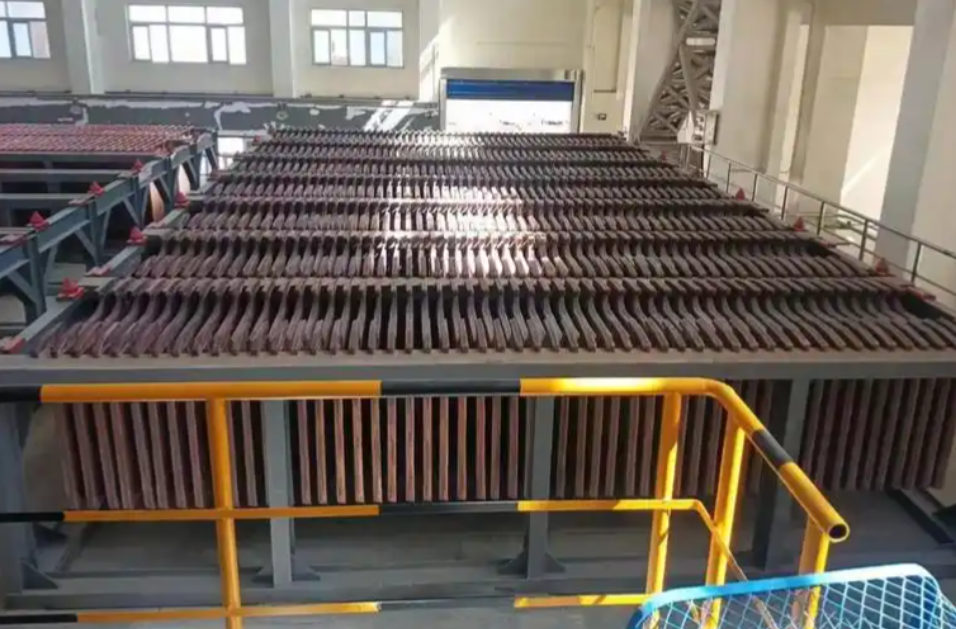
A complete electrolytic copper production system centers on electrolytic cells and their associated automated machinery units:
1. Electrolytic Cells and Power Supply Systems
Electrolytic Cells: Serving as reaction vessels, these are typically large, rectangular tanks requiring corrosion resistance, high-temperature tolerance, and excellent electrical insulation. Modern large-scale plants often utilize cells with a cathode surface area of 90–100 m² per cell to boost production capacity.
Rectifiers: These convert alternating current (AC) into direct current (DC), providing the stable current required for electrolysis and driving the deposition of copper ions onto the cathode.
2. Automated Electrode Handling Units
To enhance efficiency and safety, modern workshops are equipped with mechanized and automated electrode handling systems:
Anode Shaping and Alignment Units: These flatten anode plate surfaces, straighten suspension lugs, and perform milling to ensure precision during cell loading.
Cathode Stripping Units: These strip the electrolytically deposited copper sheets from the cathode starter sheets (or permanent cathodes), followed by washing, stacking, and weighing for output.
Anode Scrap Washing and Stacking Units: These process the residual anodes remaining after electrolysis to recover their residual value.
3. Electrolyte Circulation and Purification Systems
Circulation Pumps and Heat Exchangers: These ensure the continuous circulation of the electrolyte (copper sulfate solution) within the cells, maintaining uniform composition and temperature. Titanium plate heat exchangers are commonly used for precise temperature control.
Purification Equipment: Electrolyte is periodically withdrawn and processed—often using reactors—to remove accumulated base metal impurities, thereby maintaining electrolyte purity.
Advanced electrolytic copper equipment and automation systems serve as the technical foundation for ensuring the final copper cathodes meet LME Grade A standards while effectively controlling production costs.