



NEWS&EVENTS
Home > News&Events > Company news > What is the basic working principle of a gas-fired copper melting furnace?
The core operating principle of a gas-fired copper melting furnace involves using a high-temperature flame—generated by burning natural gas or liquefied petroleum gas (LPG)—to transfer thermal energy to the copper charge, thereby melting it.
The overall operational process can be broken down into the following key stages:
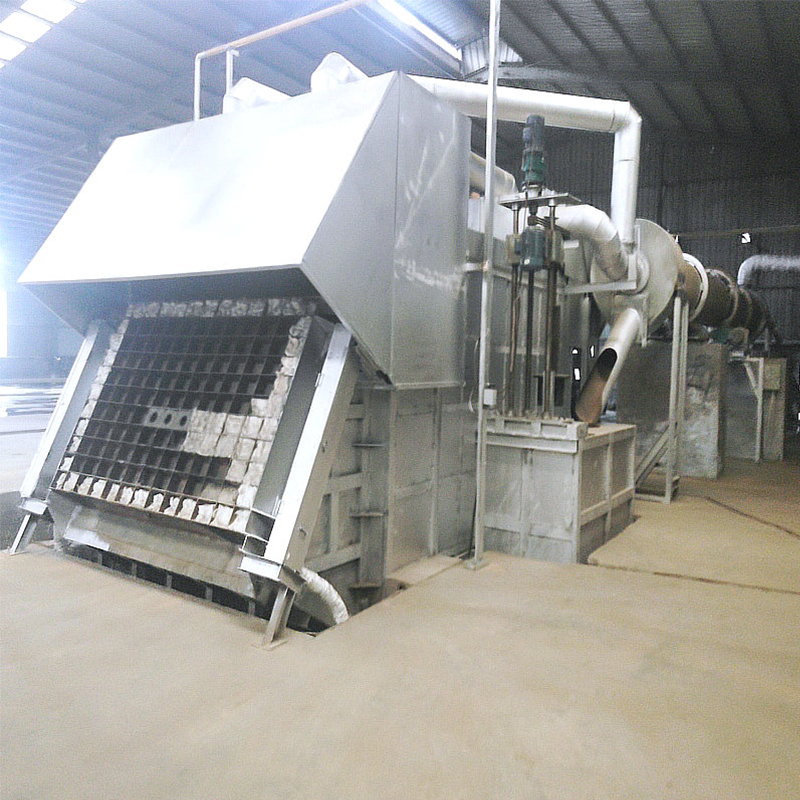
Heat generation via combustion: This is the initial step; gas and combustion air are mixed in a specific ratio within the burner and ignited, releasing a significant amount of thermal energy. Advanced systems utilize automatic controls, such as PLCs, to precisely regulate the gas-to-air ratio and manage the furnace atmosphere—for instance, adjusting it to a slightly reducing atmosphere to lower the oxygen content in the molten copper.
Heat transfer and copper melting: The high temperature produced by combustion is essential for melting the copper. While the melting point of copper is approximately 1083°C, actual production requires furnace temperatures to be maintained between 1100°C and 1300°C to ensure complete melting and meet downstream processing requirements.
Direct heating: In certain furnace designs, the high-temperature flame and flue gases heat the copper charge directly.
Indirect heating: In other designs, heat is transferred indirectly to the copper charge inside via the walls of a heat-resistant crucible.
Common furnace types and structures: Depending on production scale and process requirements, gas-fired copper melting furnaces come in several common structural configurations:
Crucible furnace: Features a simple structure where the copper charge is heated indirectly within a crucible; this effectively prevents direct contact between the molten copper and combustion products, ensuring a stable melt composition.
Reverberatory furnace: Fuel is burned in a combustion chamber, and heat is transferred to the copper in the melt bath via radiation and convection from the flame and high-temperature flue gases.
Shaft furnace: A highly efficient furnace type offering excellent heat utilization, making it suitable for continuous production.
Tilting furnace: The furnace body can be tilted, facilitating the pouring of molten copper and the removal of slag.