



NEWS&EVENTS
Home > News&Events > Company news > Why Does a Tilting Central Melting and Holding Furnace Use Monolithic Non-Stick Aluminum Castables?
The melting chamber of a tilting central melting and holding furnace is formed monolithically using a special non-stick aluminum high-strength castable. The core advantage is that the monolithic forming process significantly reduces lining joints and weak points. Traditional bricking or partial casting methods easily create stress concentration and aluminum penetration channels at joints, whereas monolithic casting gives the lining a continuous, dense structure, providing excellent crack resistance and non-stick aluminum properties, facilitating routine cleaning and maintenance, and extending lining service life.
The special non-stick aluminum high-strength castable combines high strength with low wettability. Aluminum liquid does not easily adhere to the lining surface, reducing slag buildup and aluminum-sticking cleaning work. At the same time, the high-strength characteristics enhance the lining's resistance to aluminum liquid erosion and mechanical wear, providing material assurance for the long-term stable operation of the melting chamber.
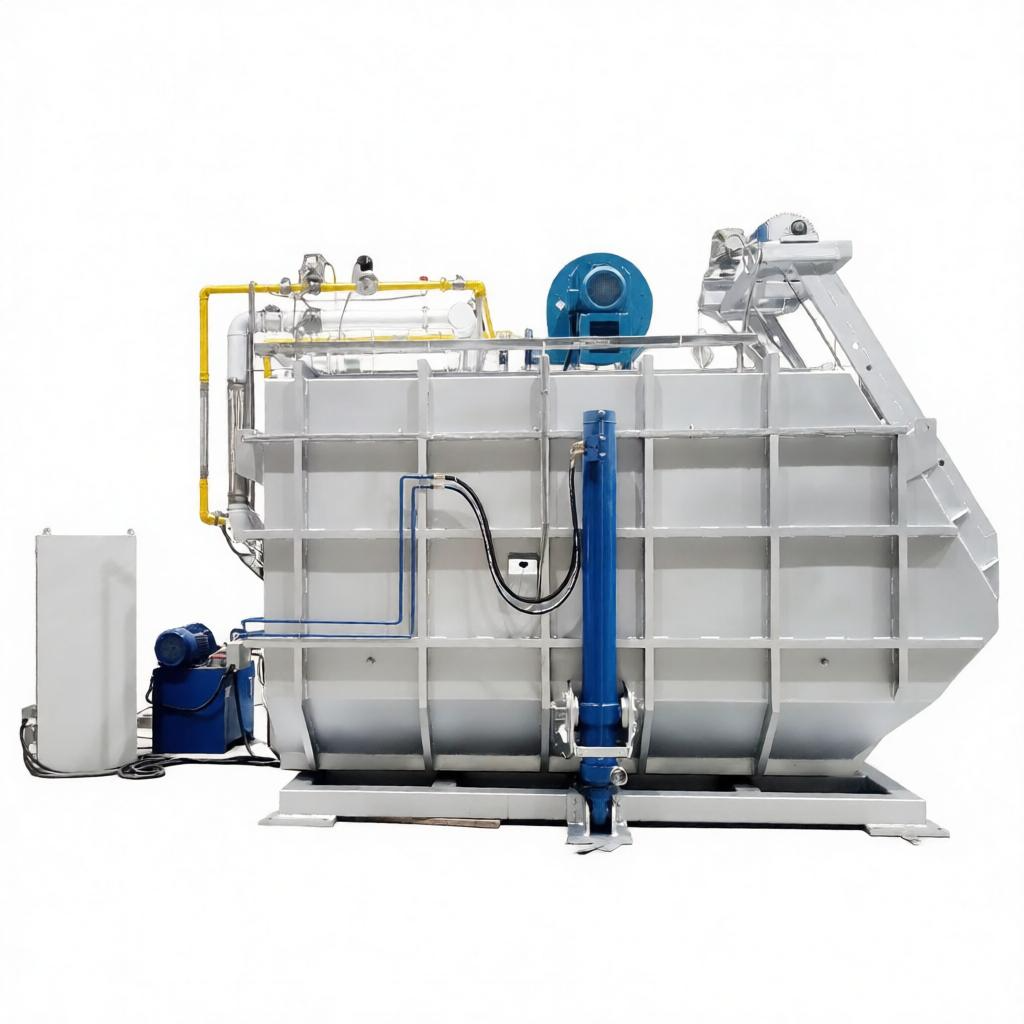
For a tilting furnace body, repeated tilting, thermal shock, and aluminum liquid erosion are the main challenges facing the lining. A monolithic cast lining better maintains structural integrity under frequent tilting conditions, avoiding aluminum leakage caused by joint loosening or cracking. The monolithic lining has better thermal shock resistance, reducing aluminum leakage and cracking risks under tilting operations and temperature fluctuations, and ensuring the safe and continuous operation of the tilting central melting and holding furnace.
The monolithic casting of the special non-stick aluminum high-strength castable significantly improves the structural integrity and service life of the melting chamber lining in the tilting central melting and holding furnace by reducing joints and enhancing crack resistance and non-stick aluminum properties. It has important engineering significance for ensuring tilting operation safety and reducing aluminum leakage risks.