



NEWS&EVENTS
Home > News&Events > Company news > Maintenance measures for anode plates of antimony electrolysis equipment
As a professional antimony electrolysis equipment manufacturer, we have accumulated extensive experience in anode plate operation through long-term production practice and customer feedback. As a core component of antimony electrolysis equipment, anode plates are inevitably prone to common problems during long-term operation. Below, we will provide a detailed introduction to these problems, their causes, and effective maintenance and repair methods.
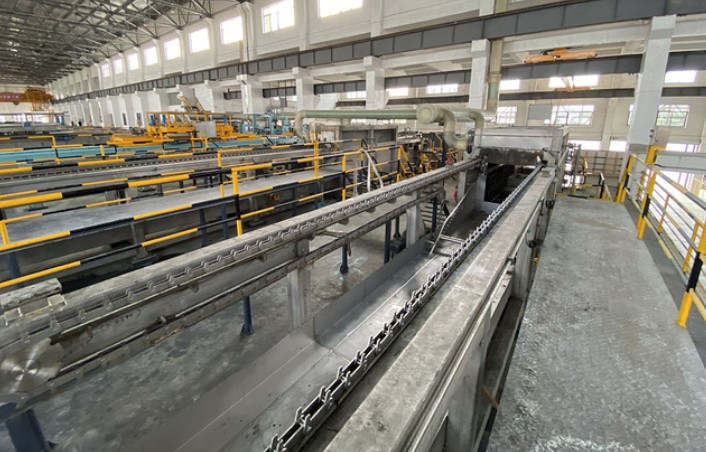
I. Common Problems
Corrosion: Operating in an electrolyte environment can lead to deterioration in surface quality and thickness, affecting conductivity and lifespan.
Deformation: Loss of contact with the electrolytic cell, uneven current distribution, reduced electrolysis efficiency, and even safety issues.
Fracture: The electrolysis process cannot proceed normally, requiring immediate shutdown and significant losses.
II. Causes of Problems
Corrosion: The electrolyte contains acidic substances and impurities, which cause long-term chemical reactions to damage the surface structure.
Deformation: Uneven current distribution causes stress; excessive temperature causes changes in the material's thermal expansion coefficient; improper installation or handling causes excessive mechanical stress.
Fracture: Reduced strength due to poor raw material quality or manufacturing process defects; fatigue damage caused by long-term stress; foreign matter intrusion or improper maintenance procedures causing external impact. III. Maintenance and Repair Methods
Regular Inspection: Develop a plan for regular visual inspections and dimensional measurements to promptly identify problems such as corrosion and deformation.
Corrosion Treatment: Minor corrosion can be treated with anti-corrosion paint. The paint should be selected based on the electrolyte composition and operating environment to ensure corrosion resistance and adhesion.
Deformation Treatment: Severe deformation can be corrected mechanically (using a special tool to apply force) or thermally (heating to soften the plate, then applying force and cooling to set the shape). If correction is impossible or cost-prohibitive, replace the plate.
Fracture Treatment: Clean the fractured area of impurities before welding, selecting appropriate materials and processes to ensure joint strength and conductivity. After repair, perform quality inspections to ensure performance meets standards.
In short, the proper operation of anode plates is crucial to the stable production of antimony electrolysis equipment. Regular inspections and timely problem resolution can extend lifespan, improve efficiency, and reduce costs. We will continue to provide high-quality products and technical support to promote industry development.