



NEWS&EVENTS
Cyanide leaching is a commonly used and effective method for extracting precious metals from tailings, especially suitable for tailings with a high proportion of fine-grained gold (<0.074mm) or where gold particles are encapsulated by sulfides. This process offers different treatment methods for tailings with varying impurity contents.
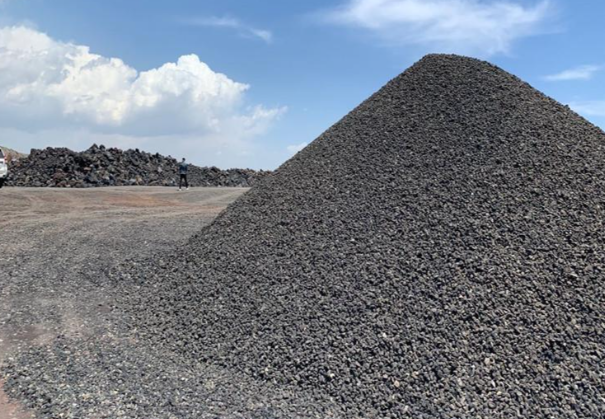
For low-impurity oxidized tailings, a heap leaching method combined with a geomembrane is used. First, an 8-10 meter high tailings heap is constructed in the geomembrane heap leaching area, and then a 0.05%-0.1% sodium cyanide solution is sprayed onto it. Under the action of the solution, gold reacts with the cyanide to form a gold-cyanide complex. Afterwards, the leachate flows through activated carbon, where the gold is adsorbed. This method can achieve a recovery rate of 75%-85%. Simultaneously, the geomembrane effectively prevents solution leakage, avoiding pollution to the surrounding environment.
For high-impurity, fine-grained tailings, a carbon-in-pulp (CIP) process combined with tailings recycling is employed. After the tailings enter a closed CIP tank, sodium cyanide solution is added for reaction, while activated carbon is simultaneously introduced to adsorb gold. The tailings after adsorption are then treated in a cyanide removal system to reduce the cyanide concentration to <0.5 mg/L, and subsequently recycled for refining. This process achieves a higher recovery rate, reaching 85%-90%, and enables zero wastewater discharge.
The cyanidation process offers significant advantages, including high gold extraction efficiency, a high recovery rate, and strong adaptability, capable of handling various complex tailings. However, this process also has limitations. Cyanide is highly toxic, necessitating strict environmental protection measures during production, such as proper wastewater treatment and ensuring seepage prevention in tailings ponds, to guarantee both production and environmental safety.