



NEWS&EVENTS
Home > News&Events > Company news > Process flow for extracting platinum and palladium from tailings
Recovery of platinum and palladium from tailings is a highly valuable process for comprehensive resource utilization. Due to the low grade and complex occurrence of precious metals in tailings, the core of the process lies in efficient enrichment and selective separation, typically following the technical route of "pretreatment-enrichment-leaching-refining".
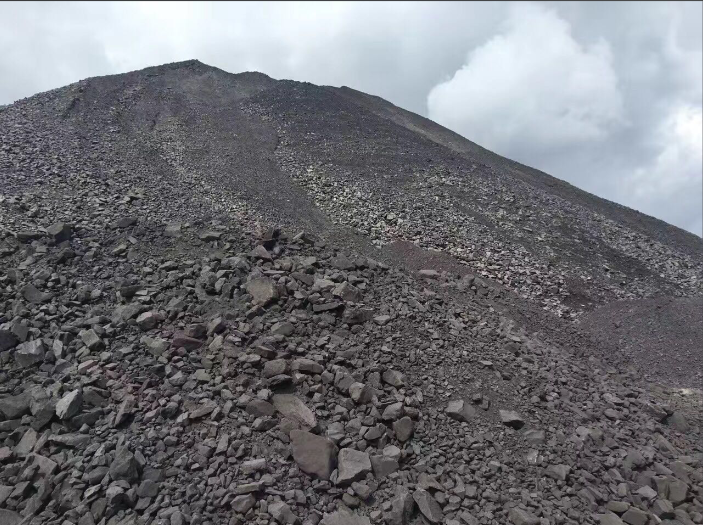
First, a detailed compositional and phase analysis of the tailings is essential, forming the cornerstone of the process design. The key to pretreatment is physical re-enrichment, often achieved through regrinding to liberate the minerals, followed by efficient flotation or gravity separation to obtain platinum-palladium concentrate. This significantly reduces subsequent processing volumes and substantially improves economic efficiency.
There are two main paths in the core extraction process:
Direct wet leaching: For low-grade or difficult-to-enrich tailings, an enhanced wet process is often used, such as aqua regia or hydrochloric acid-oxidant systems, to dissolve platinum and palladium into chloride complexes at high temperatures, which then enter the solution. This method is direct but consumes a lot of reagents and produces many impurities.
Pyrometallurgical-hydrometallurgical combined process: For enriched concentrates, a more efficient method is smelting. By adding copper, nickel, or lead as a collector, trace amounts of platinum and palladium are enriched in a small amount of matte or precious lead at high temperatures, achieving a concentration of over a thousand times, creating optimal conditions for subsequent refining.
Regardless of the route taken, solution purification and separation are ultimately required. Modern processes commonly employ selective solvent extraction or ion exchange techniques for the efficient separation and purification of platinum and palladium. Finally, high-purity sponge metal is obtained through precipitation, calcination, and reduction.
In short, there is no fixed model for extracting platinum and palladium from tailings. It is necessary to find the best balance between recovery rate, cost and environmental protection through systematic experiments based on the characteristics of the material, so as to achieve the goal of extracting treasure from "waste".