



NEWS&EVENTS
Home > News&Events > Company news > Rotary furnace: From antimony ore to antimony ingots/antimony trioxide
The conversion of antimony ore into antimony metal ingots or antimony trioxide powder requires a series of precise smelting processes. The success, efficiency, and product purity of modern antimony pyrometallurgical processes largely depend on the technical performance of the core equipment.
In the reduction smelting stage, the ore and reducing agent undergo chemical reactions at high temperatures. At this stage, the uniformity and stability of the temperature field within the rotary kiln are critical factors affecting the antimony content in the slag and the metal recovery rate. A uniform temperature field ensures complete reaction, reduces antimony residue in the slag, and thus improves economic efficiency. If there are areas of excessively low temperature or temperature fluctuations in the furnace, it will lead to resource waste and increased production costs.
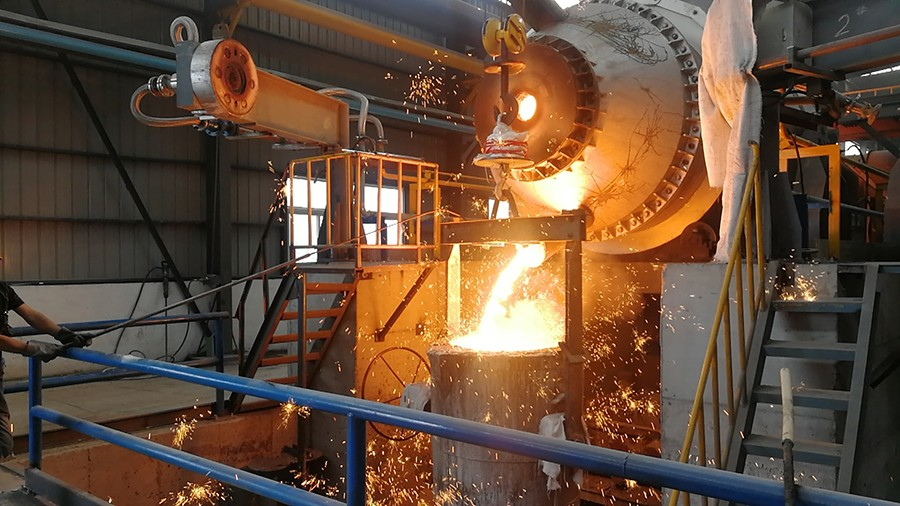
In the oxidation volatilization stage, antimony volatilizes in the form of oxides and is then reduced and collected. This process places stringent demands on the airtightness, corrosion resistance, and design of the condensation and recovery system. Even minor leaks in the volatilization channel will reduce the antimony recovery rate; while condensation efficiency directly affects whether the product can be efficiently precipitated in the desired form (such as antimony oxide or fine powder). Therefore, the precision of the equipment directly determines the purity of antimony recovery and the product form.
In summary, from efficient and energy-saving smelting systems to precisely controlled volatilization and condensation devices, excellent processes must rely on excellent hardware support. By providing stable, efficient, and intelligent core equipment, every step of the conversion from antimony ore to antimony products meets high standards, providing a solid guarantee for the stable development of the entire antimony industry.