



NEWS&EVENTS
Home > News&Events > Company news > Rotary refining furnace: A key component in the pyrometallurgical copper refining process.
Copper, as an indispensable basic material in modern industry, is widely used in power generation, construction, home appliances, electronic technology, and energy transmission. Its smelting processes are mainly divided into three major systems: pyrometallurgy, hydrometallurgy, and recycling. Among these, pyrometallurgy, due to its high efficiency in processing high-grade copper sulfide ores, has become the mainstream method for global copper production. In this process, anode copper, as a key intermediate product before electrolytic refining, has a purity that directly affects the quality of the final cathode copper. The rotary refining furnace is the core equipment for converting crude copper into anode copper.
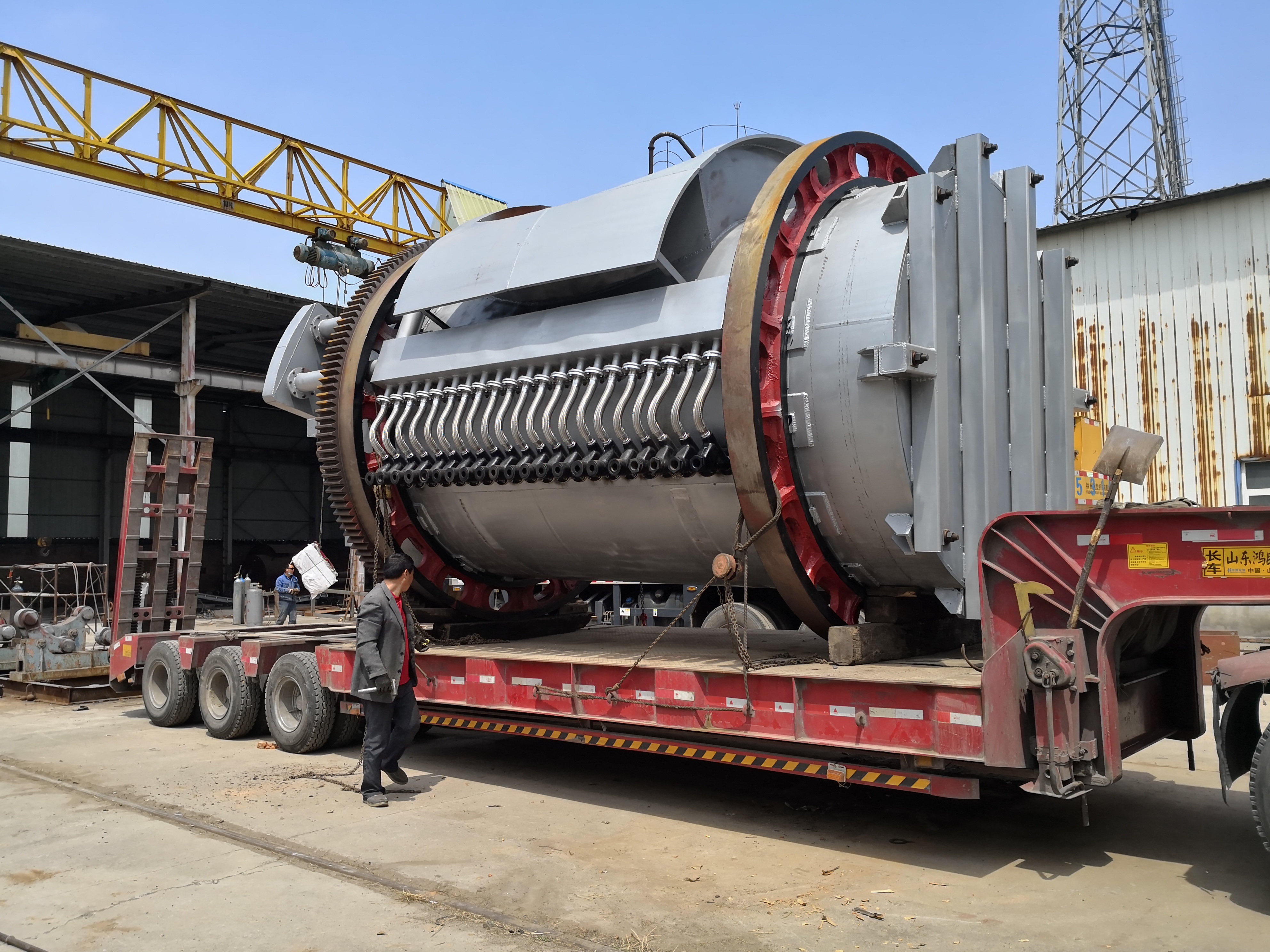
The rotary refining furnace is located between the converter blowing process and anode casting in the pyrometallurgical copper refining process, playing a core function of connecting the preceding and succeeding stages. The crude copper produced from converter blowing still contains impurities and requires further purification through refining. The rotary refining furnace utilizes a cyclical operation (charging, oxidation, reduction, and casting) to oxidize impurities with high-pressure air to form slag, and then uses a hydrocarbon reducing agent to remove oxygen from the molten copper, ultimately increasing the purity of the copper liquid to form anode plates that meet electrolytic standards. Its cylindrical furnace body can rotate 360°, achieving dynamic contact between the tuyeres and the molten metal through tilting, ensuring efficient oxidation and reduction reactions; the composite refractory structure of magnesia-chrome bricks and clay bricks can withstand high temperatures of 1450℃ and molten metal erosion, guaranteeing the long-term stable operation of the equipment.
Compared to traditional reverberatory furnaces, rotary refining furnaces offer significant advantages: a high degree of mechanization and automation reduces manual intervention; the sealed design minimizes flue gas leakage and improves the operating environment; and reduced heat loss leads to an approximately 15% increase in thermal efficiency. Although the equipment investment is higher, its high efficiency and environmentally friendly characteristics make it the preferred choice for large-scale copper smelters.