



NEWS&EVENTS
Home > News&Events > Company news > Technological Trends and Advantages of Rotary Aluminum Melting Furnaces
The aluminum recycling and smelting industry is facing multiple challenges, including high energy consumption, severe oxidation losses, uneven melt pool temperatures, and increasing environmental pressure. Against the backdrop of "dual carbon" goals (carbon peaking and carbon neutrality), these pain points not only constrain companies' economic efficiency but also impact their sustainable development capabilities. Traditional static melting furnaces are prone to strong melt turbulence during production, exacerbating aluminum liquid absorption of gases and oxidation, leading to reduced metal recovery rates, while energy consumption and emissions remain high.
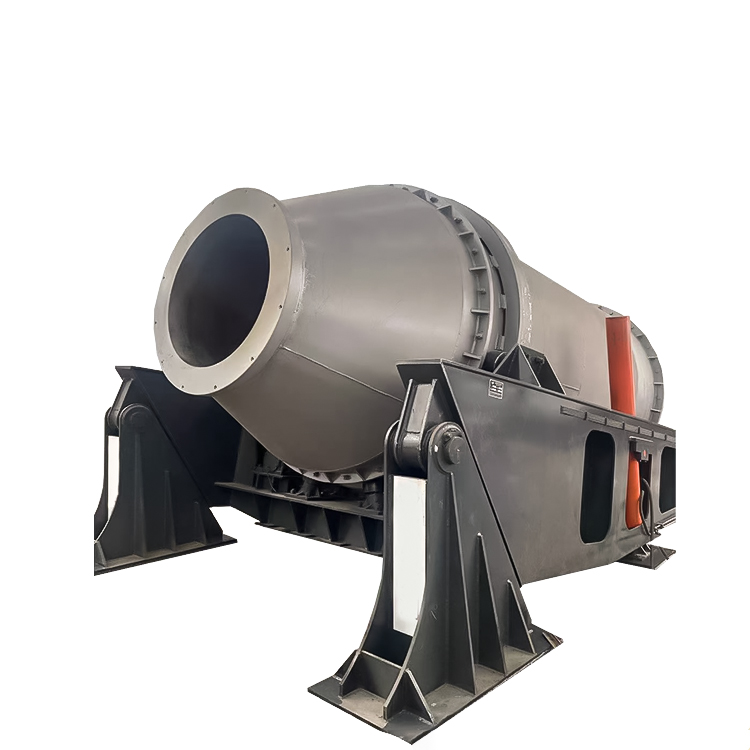
In this context, rotary aluminum melting furnaces, with their unique "dynamic melting" principle, are becoming a key technological direction for overcoming these challenges. Their core advantage lies in the slow rotation of the furnace body, which allows for gentle and thorough mixing of the materials inside (scrap aluminum, flux, etc.) during tilting. This mechanically driven "dynamic" process precisely addresses the fundamental contradictions of traditional technologies:
Significantly reduced oxidation losses: The rotational movement avoids the violent turbulence and large-area exposure of the aluminum liquid caused by strong electromagnetic stirring or gas impingement in traditional fixed-bed furnaces, significantly reducing the contact between the metal and oxygen, thus effectively lowering the oxidation loss rate.
Significantly improved thermal efficiency and uniformity: The continuous tumbling of the furnace charge allows for more thorough and uniform contact with the combustion flame or high-temperature furnace gases, greatly improving heat exchange efficiency. This not only shortens the melting time and reduces unit energy consumption but also ensures highly consistent temperatures throughout the melt pool, improving melt quality.
Achieving clean production: Optimized combustion design and more thorough material mixing, coupled with the good dispersion effect of the flux due to the furnace rotation, result in more thorough impurity removal, reduced smoke and dust generation, and easier subsequent environmental treatment, meeting stringent emission standards.
Therefore, for aluminum recycling companies committed to reducing costs, improving efficiency, enhancing product quality, and achieving green transformation, choosing a rotary aluminum melting furnace is not just an equipment upgrade but a strategic choice to address common industry challenges and build core competitiveness. Through technological innovation, it transforms "dynamics" into "efficiency" and "cleanliness," pointing to a clear technological path for modern aluminum smelting.