



NEWS&EVENTS
Home > News&Events > Company news > How to optimize and improve the quality of cathode copper using copper electrolytic cells?
The purity of cathode copper directly determines its application and economic value, and the process control of the electrolytic cell is the core factor affecting purity. Even micron-level differences in impurities can degrade the product from high-purity copper. Therefore, systematic in-cell optimization is crucial for achieving high-quality cathode copper.
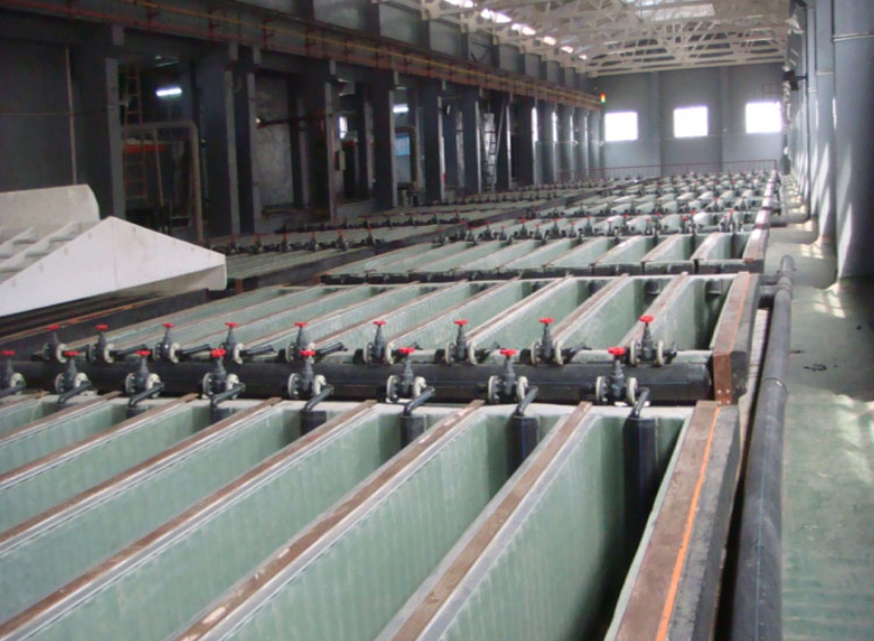
Precise control of the electrode gap is fundamental to electrolytic efficiency and deposition quality. Through automated electrode positioning and real-time monitoring technology, the electrode gap can be maintained stably, reducing concentration polarization and ensuring uniform copper ion deposition, significantly reducing surface roughness and nodule formation.
The uniformity of electrolyte circulation directly affects ion distribution. Optimizing the inlet and outlet layout, combined with a directional circulation system, effectively prevents localized copper depletion or impurity accumulation, ensuring consistent deposition across the entire cathode surface and reducing edge effects.
Real-time and intelligent short-circuit detection mechanisms greatly reduce ineffective electrolysis. Through online voltage monitoring and automatic alarms, short-circuited electrodes can be isolated promptly, not only reducing energy consumption but also preventing deposition abnormalities and impurity inclusion caused by short circuits.
The control of magnetic fields generated by the current in the cell is often overlooked. Reasonable electrode arrangement and current flow design, or the introduction of auxiliary demagnetizing devices, can mitigate the interference of magnetic fields on electrolyte flow and ion migration, improving the density of the deposited layer.
The uniform and stable temperature field is equally important. Temperature fluctuations lead to inconsistent additive performance and changes in deposition rate. Using zoned temperature control and efficient heat exchange minimizes the temperature gradient in the cell, ensuring a continuously stable deposition process.
Efficient anode sludge treatment is key to preventing impurities. Optimizing anode composition, cell loading methods, and sludge settling systems can minimize anode sludge adhesion to the cathode, preventing the inclusion of physical impurities.
Every detail optimization contributes to achieving higher product grades. For customers, these process improvements directly translate into the physicochemical indicators of cathode copper: lower oxygen content, smoother surface, and higher conductivity, ultimately consistently meeting high-purity copper standards, meaning stronger competitiveness in the high-end electrical and electronic materials market. Through systematic optimization of the copper electrolytic cell, companies achieve not only quality upgrades but also a comprehensive improvement in overall production efficiency and market value.