



NEWS&EVENTS
Home > News&Events > Company news > Analysis of Key Safety Points for Ignition of Gas-fired Rotary Furnaces
Gas-fired rotary furnace are widely used in industrial production, and their ignition process is crucial. Improper operation can easily lead to safety accidents. The following will detail the precautions and corresponding countermeasures during ignition.
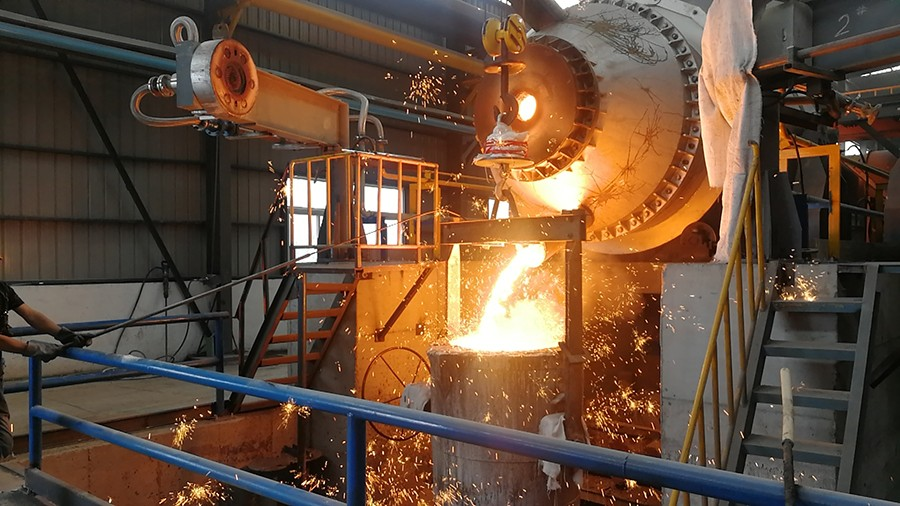
Insufficient purging time before ignition is a common safety hazard. According to safety regulations, a thorough purging process must be performed with an air volume of 4-5 times the furnace volume before ignition to completely remove any residual gas from the furnace. If purging is incomplete, the residual gas mixes with the newly introduced gas, and if it encounters the ignition spark, it could lead to serious accidents such as explosions. Therefore, operators must strictly adhere to the prescribed purging time and must not cut corners.
Delayed ignition is equally dangerous. If the time difference between the gas valve opening and the generation of the ignition spark after the ignition transformer is energized is too long, a large amount of gas will accumulate in the furnace. Ignition at this time results in instantaneous combustion of the gas, generating enormous energy that could damage the furnace or even cause an explosion. To avoid this, a programmable controller with ignition monitoring should be used. This controller can precisely control the ignition timing, ensuring that a spark is generated the instant the gas is introduced, achieving "fire-gas matching" and guaranteeing ignition safety.
Improper damper opening can also affect ignition. If the damper is too large, the strong airflow will scatter the ignition spark, preventing the gas from igniting properly; if the damper is too small, insufficient air will enter the furnace, resulting in an overly rich mixture, which is also difficult to ignite, and the accumulated mixture also poses an explosion risk. Therefore, the damper opening should be adjusted appropriately according to the actual situation during ignition to ensure a suitable air-to-gas mixture ratio.
In summary, the ignition of a gas-fired rotary kiln must strictly follow the "purge first, then ignite" procedure. With the help of equipment such as a programmable controller with ignition monitoring, each step must be precisely controlled to ensure ignition safety and provide a guarantee for the smooth operation of production.