



NEWS&EVENTS
Home > News&Events > Company news > Energy-saving and environmentally friendly advantages of scrap copper rotary furnaces
Rotary furnaces for scrap copper exhibit significant energy-saving and environmental protection advantages in the field of scrap copper smelting, providing strong support for the sustainable development of the industry.
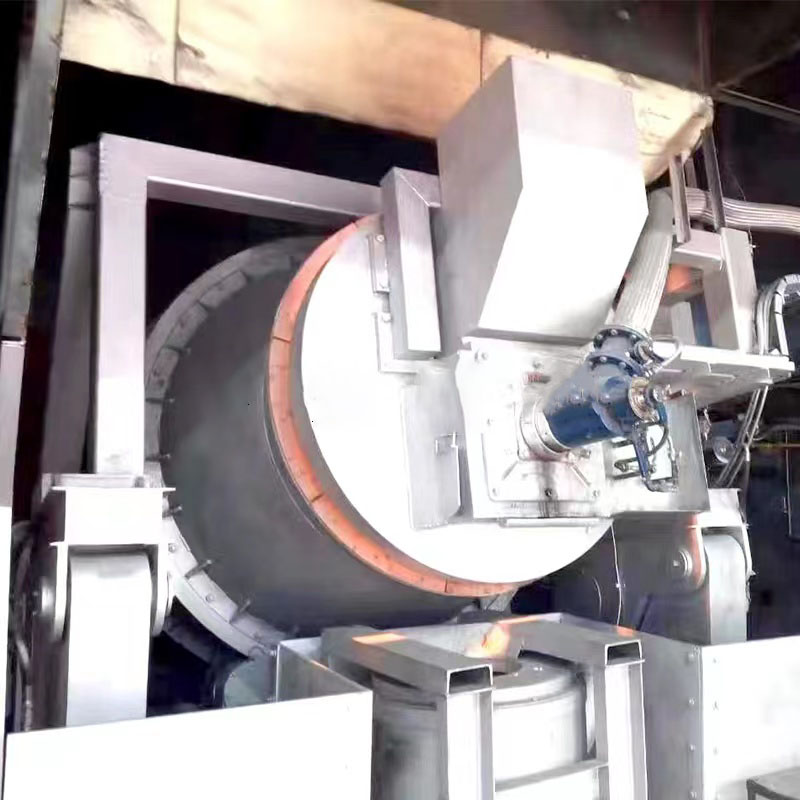
In terms of energy conservation, rotary kilns excel. Their rotating furnace body, a unique design, ensures thorough contact between the high-temperature flue gas and the scrap copper, significantly improving heat transfer efficiency—a clear advantage over stationary reverberatory furnaces. Simultaneously, rotary kilns actively incorporate modern combustion technologies, such as oxygen-enriched combustion to increase oxygen concentration and ensure complete fuel combustion, and regenerative combustion to recover waste heat from the flue gas and preheat the combustion air. These technologies work together to effectively reduce exhaust gas temperature, allowing more heat to remain within the furnace, thereby significantly reducing fuel consumption and lowering production costs.
The environmental advantages are equally significant. Traditional reverberatory furnaces require the furnace door to be opened wide during charging and slag removal, resulting in a large amount of flue gas overflowing and polluting the environment. In contrast, rotary furnaces typically have only a small furnace opening, which is precisely controlled by a flue damper to maintain a slightly negative pressure state inside the furnace, effectively preventing flue gas leakage. After the flue gas is treated in a secondary combustion chamber, the black smoke and yellow smoke (pungent zinc oxide fumes) are completely eliminated, successfully solving the long-standing "smoke" problem in scrap copper smelting.
Furthermore, the rotary kiln's automated dust collection system also contributes to its environmental performance. Because the kiln operates stably, the amount of flue gas produced is relatively stable, creating favorable conditions for the stable operation of environmental protection equipment such as bag filters. This allows exhaust emissions to easily meet environmental standards, reducing pollution to the atmosphere and achieving a win-win situation for both economic and environmental benefits.