



NEWS&EVENTS
Home > News&Events > Company news > Process for Extracting Antimony Oxide from Antimony Ore via Rotary Furnace Smelting
In the field of non-ferrous metal smelting, antimony extraction technology has garnered significant attention. Currently, the rotary furnace smelting process is gradually emerging as the mainstream technological approach for processing antimony ores, owing to its exceptional adaptability, efficient thermal energy utilization, and environmental advantages.
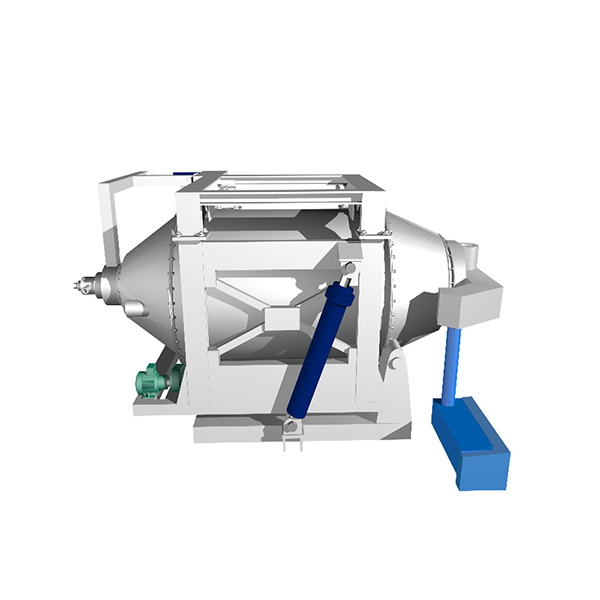
Process Principle: Dynamic Volatilization, Precise Separation
The core principle behind processing antimony ore in a rotary furnace lies in "volatilization roasting." Within the rotating furnace body, the material continuously tumbles, ensuring thorough contact with the high-temperature gas stream. Under either an oxidizing or reducing atmosphere, the antimony minerals are converted into gaseous antimony trioxide; this gas is carried by the flue gas into a dust collection system, where, after cooling, it is captured as high-grade antimony oxide powder, thereby achieving a complete separation from the gangue minerals.
Core Advantages: Efficient Adaptability, Flexible Control
This process demonstrates strong adaptability to raw materials, capable of treating antimony sulfides, antimony oxides, and complex associated ores of varying grades, thereby significantly expanding the scope of mineral resource utilization. Through the precise regulation of airflow and fuel ratios, the required furnace atmosphere can be flexibly established within the reactor, effectively suppressing the volatilization of impurities and ensuring product purity. Furthermore, the rotary furnace operates smoothly and facilitates continuous, large-scale production, providing a stable foundation for industrial-scale operations.
Green Intelligence: Balancing Environmental Protection and Economic Growth
Modern rotary furnaces incorporate integrated intelligent control systems capable of real-time monitoring of temperature, pressure, and atmospheric parameters, thereby enabling precise smelting operations. The optimized furnace structure ensures uniform temperature distribution and reduced energy consumption. Furthermore, comprehensive, multi-stage dust collection and desulfurization facilities are installed to efficiently recover antimony oxides from flue gas; this not only minimizes material loss but also generates economic value, ultimately ensuring compliance with emission standards.
The application of rotary furnaces in the field of antimony extraction embodies the metallurgical industry's trend toward greater efficiency, intelligence, and cleanliness, injecting sustained momentum into the high-quality development of the antimony metallurgy sector.