



NEWS&EVENTS
Home > News&Events > Company news > Process Advantages and Flexibility of Rotary Furnaces in Antimony Refining
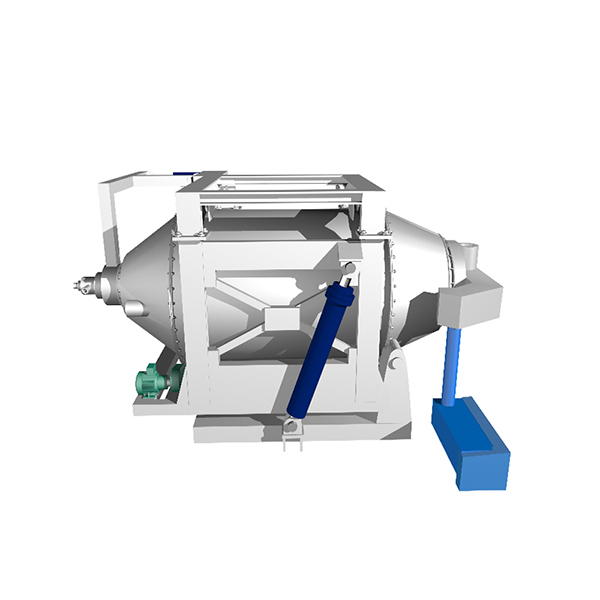
As the core equipment in antimony refining, the rotary furnace enables the flexible conversion of crude antimony into either high-purity metallic antimony or high-value-added antimony trioxide. By leveraging the furnace body's rotational stirring characteristics and precise control over temperature and atmospheric conditions, this process allows for the switching of product pathways in response to market demand—thereby fully embodying the principles of metallurgical process flexibility and the maximization of resource value.
I. Physicochemical Basis of the Refining Process
Within the rotary furnace, impurities are removed from crude antimony through the addition of refining agents. For the removal of arsenic and iron, soda ash and saltpeter are added; an oxidation reaction ensues, generating a sodium arsenate slag. Lead removal is achieved through the addition of sulfur or alkali, resulting in the formation of a lead sulfide or plumbate slag layer. The sealed, rotating nature of the rotary furnace facilitates the efficient separation of slag from the antimony melt, laying a solid foundation for the subsequent production of high-purity products.
II. Flexible Product Switching Pathways
Following the refining process, the high-purity liquid antimony can be directed into one of two process pathways, depending on specific requirements:
Direct Casting (Metallic Antimony): When metallic antimony is required, the furnace temperature is maintained between 700°C and 750°C under a reducing atmosphere. After refining and impurity removal, the molten antimony is cast directly into ingots, which are utilized in the manufacture of lead-acid batteries, alloys, and semiconductor materials.
Evaporation and Oxidation (Antimony Trioxide): When market demand for high-value-added flame retardants is strong, the antimony is not cast into ingots after refining. Instead, the furnace temperature is raised to between 850°C and 950°C, and an excess of air is injected. The metallic antimony undergoes evaporative oxidation and subsequently condenses and crystallizes within a dust collection system, yielding Sb₂O₃ products characterized by high whiteness and controllable particle size.
III. Engineering Advantages of the Rotary Furnace
Its superior sealing integrity ensures an Sb₂O₃ recovery rate exceeding 98% during the evaporation and oxidation process; the mechanized rotation reduces the antimony content remaining in the slag; and its high thermal efficiency—enabling rapid switching between refining and evaporation temperatures—guarantees operational flexibility.
In summary, the rotary furnace refining process—through the precise regulation of temperature and atmospheric conditions—empowers enterprises to respond flexibly to market fluctuations, thereby maximizing economic returns while simultaneously enhancing resource utilization efficiency.