



NEWS&EVENTS
Home > News&Events > Company news > Key Equipment and Functions Involved in the Pyrometallurgical Smelting Process for Antimony
Pyrometallurgical antimony smelting is a vital method for producing metallic antimony and antimony trioxide; its process flow is complex and relies on the coordinated operation of multiple key pieces of equipment. Together, these devices constitute a complete production chain, spanning from raw material processing to product refining.
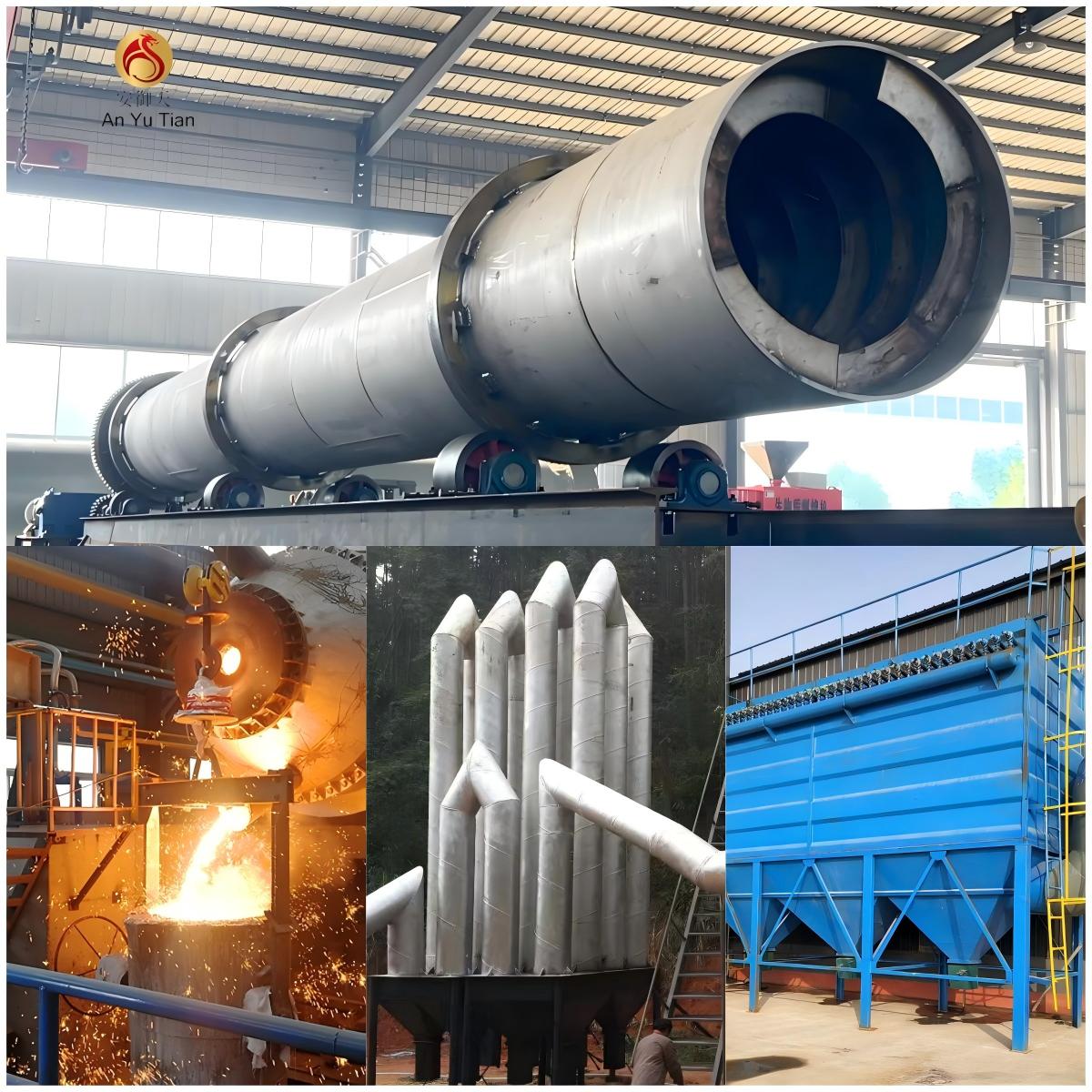
1. Rotary Kiln: This unit undertakes the critical task of raw material pretreatment. Antimony concentrates undergo high-temperature roasting—ranging from 800°C to 900°C—within the rotary kiln. Through oxidative desulfurization, sulfides are converted into oxides, thereby establishing the necessary conditions for subsequent reductive smelting. This stage directly impacts the overall efficiency and environmental performance of the entire process.
2. Antimony Rotary Smelting Furnace: This unit serves a dual function. On one hand, it performs reductive smelting on the desulfurized antimony powder, reducing antimony oxides into their metallic form. On the other hand, the waste heat generated by this furnace provides thermal support to the rotary kiln, enabling the cascaded utilization of energy and effectively reducing production energy consumption.
3. Dust Collector: The antimony-bearing dust and fumes generated during the smelting process require proper recovery, and the dust collector plays a pivotal role in this stage. It not only efficiently collects valuable antimony trioxide powder as a byproduct but also undertakes the task of purifying exhaust gases, thereby mitigating environmental pollution caused by dust emissions.
4. Antimony Refining Furnace (Rotary Furnace): Crude antimony and refining agents are heated together within the furnace, where impurities are removed through refining reactions. Depending on market demand, the resulting high-purity antimony can either be directly cast into ingots or subjected to further heating for evaporative oxidation to produce high-value-added antimony trioxide products, thereby demonstrating the flexibility of the process.
5. Annular Flue: This component utilizes natural heat dissipation to cool down high-temperature flue gases, thereby preparing them for subsequent purification stages.
6. Spray Tower: Through water-spray washing, this unit further removes harmful components from the flue gases, ensuring that exhaust emissions meet regulatory standards and facilitating green production.
Through the coordinated operation of the aforementioned equipment, the pyrometallurgical antimony smelting process successfully yields high-purity metallic antimony and antimony trioxide.