



NEWS&EVENTS
Home > News&Events > Company news > Wide-Ranging Applications of Tilting Crucible Aluminum Melting Furnaces
Thanks to its flexible tilting design, efficient melting capabilities, and compact footprint, the tilting crucible aluminum melting furnace has become an indispensable core piece of equipment in the processing of low-melting-point non-ferrous metals. It enables precise control over the smelting process and facilitates rapid switching between alloy grades, making it particularly well-suited for production models characterized by high product variety and small batch sizes. The following are its four primary application scenarios:
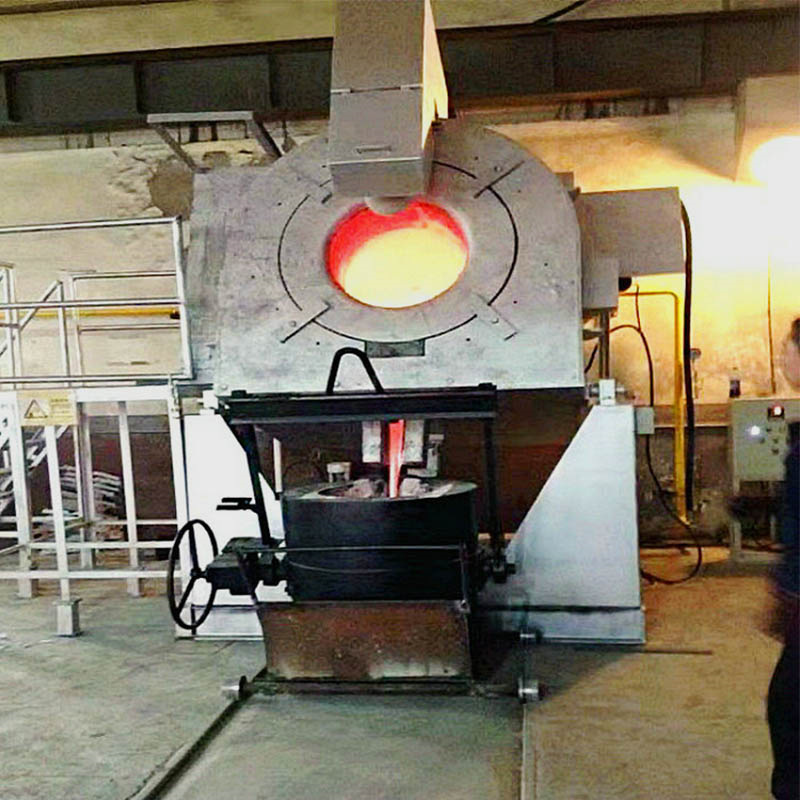
1. Aluminum Alloy Casting and Die Casting: Primarily serves aluminum alloy casting and die casting enterprises, where it is utilized for the melting and holding (temperature maintenance) of low-melting-point non-ferrous metals such as aluminum and zinc. It can be integrated with die casting machines to form automated production lines, allowing for the convenient transfer of molten aluminum—either to a holding furnace or directly to the die casting machine—thereby enabling automated, continuous production.
2. Non-ferrous Metal Smelting: Applicable to the melting, smelting, and holding of metals such as aluminum, lead, and copper. By selecting crucibles made of different materials, the furnace can process various metals individually, enabling multi-purpose functionality within a single unit and satisfying diverse, flexible production requirements.
3. Recycled Aluminum Recovery: Functioning as a compact, centralized melting furnace, it offers numerous advantages, including low burn-off loss, rapid heating rates, and simple maintenance. Its fuel-fired heating system generates higher furnace temperatures, enabling the melting of various types of aluminum scrap and return materials—which are often difficult for electric resistance furnaces to process—thereby facilitating the effective utilization of waste resources. The equipment occupies minimal floor space, and switching between alloy grades simply requires tilting the furnace to pour out the existing molten aluminum; this makes it an ideal solution for manufacturers facing space constraints or those requiring frequent changes in alloy composition.
4. Battery Manufacturing Support: Can be utilized for lead melting as an integral component of battery production lines. During lead melting operations, it works in conjunction with lead pumps to transfer molten lead to holding furnaces or die casting machines, thereby achieving continuous, automated production and significantly boosting the efficiency of battery plate casting.
In summary, the tilting crucible aluminum melting furnace plays a pivotal role across various sectors—including die casting, non-ferrous metal smelting, recycling, and battery manufacturing—distinguishing itself through exceptional adaptability and cost-effectiveness. As the demand for green manufacturing and flexible production systems continues to rise, the furnace's inherent advantages—specifically its ease of material switching and low-loss melting capabilities—will become even more pronounced, establishing it as the ideal melting solution for small-to-medium enterprises and diversified manufacturing workshops.