



NEWS&EVENTS
Home > News&Events > Company news > How Does a Rotary Lead Smelting Furnace Achieve High-Efficiency Smelting?
The rotary lead smelting furnace serves as a core piece of equipment in modern lead smelting processes; achieving high-efficiency smelting within it is of paramount importance for enhancing metal recovery rates and reducing energy consumption. The key to achieving such efficiency lies in a systematic optimization approach encompassing various aspects, including furnace body structure, operational parameters, thermal regimes, and material management.
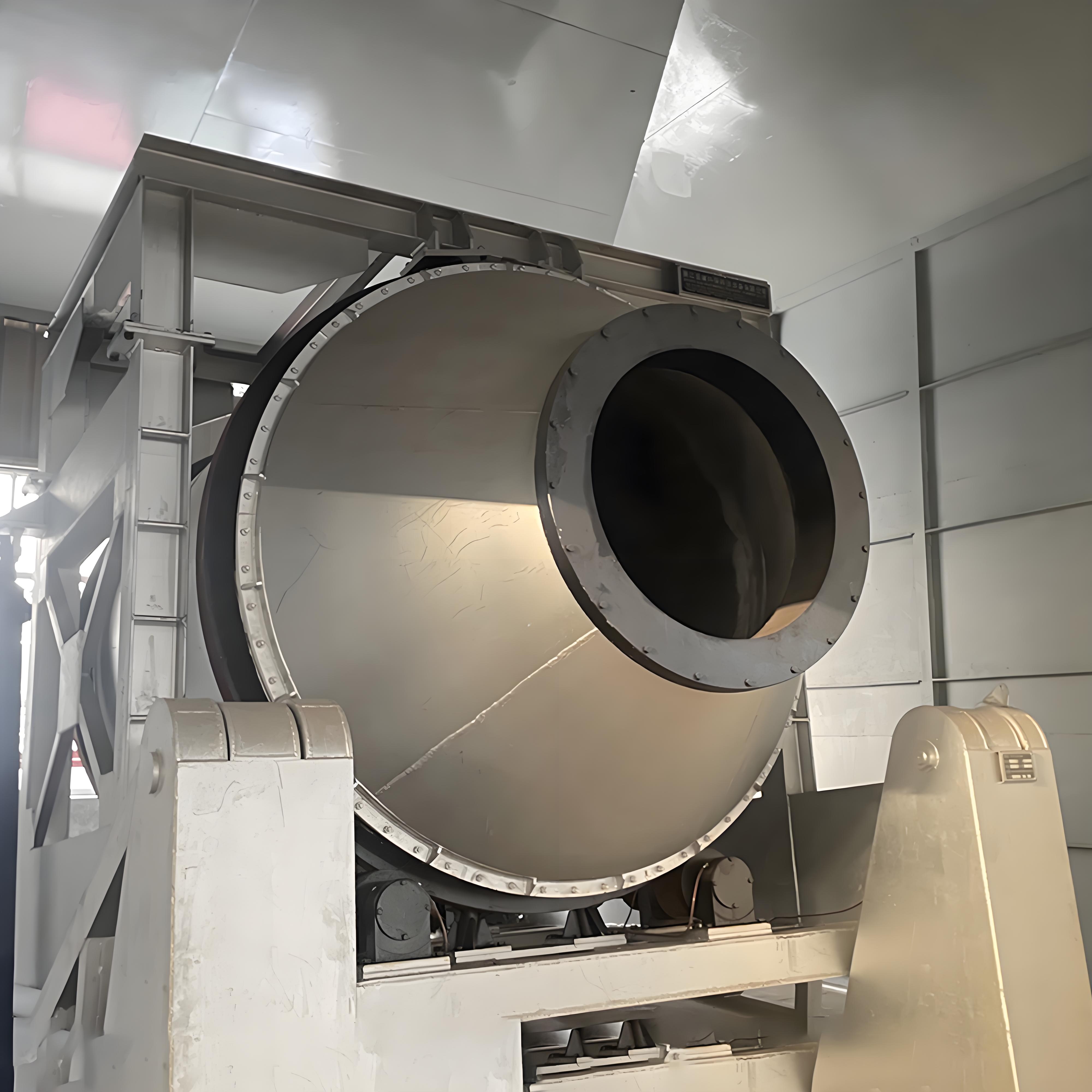
First, optimizing the structural design of the furnace body constitutes the foundation. By appropriately configuring the furnace's length-to-diameter ratio, rotational speed, and inclination angle, the tumbling and mixing effects of materials within the furnace are enhanced. This promotes thorough contact among the materials, thereby accelerating the processes of heat and mass transfer. Concurrently, improving the high-temperature resistance and corrosion resistance of the furnace lining materials helps minimize heat loss, extend the furnace's service life, and ensure continuous, stable operation.
Second, precise control of the thermal regime is critical. By regulating the supply of fuel and the ratio of combustion air, an appropriate reducing atmosphere and temperature field are maintained within the furnace, thereby preventing localized overheating or incomplete firing. A stable and uniform temperature distribution facilitates the rapid reduction of lead oxides and encourages impurities to migrate into the slag phase, thereby increasing the yield of crude lead. Furthermore, the judicious application of waste heat recovery systems allows for the reutilization of heat carried away by flue gases, significantly reducing the energy consumption per unit of product.
Third, optimizing material batching and feeding methods is essential. Based on the composition of the raw materials, the quantities of fluxes and reducing agents added are adjusted to ensure a suitable slag composition with good fluidity, which facilitates the settling and separation of molten lead. The adoption of continuous or semi-continuous feeding—synchronized with the periodic rotation of the furnace body—ensures that newly introduced materials are rapidly blended into the melt, thereby reducing reaction times and boosting operational efficiency.
Finally, strengthening automation control and process monitoring is indispensable. By leveraging sensor technologies—such as online temperature measurement, flue gas analysis, and furnace body vibration monitoring—operational parameters can be adjusted in real time, thereby avoiding human-induced delays or misjudgments. Intelligent control systems can automatically adjust airflow, coal feed rates, and rotational speeds in response to changing operating conditions, ensuring that the rotary lead smelting furnace consistently operates at its optimal smelting state.
In summary, through a multi-pronged approach encompassing structural optimization, thermal regime regulation, material management, and intelligent control, the rotary lead smelting furnace can achieve the objectives of high efficiency, low energy consumption, and high recovery rates, thereby driving the advancement of lead smelting technology toward a greener and more intelligent future.