



NEWS&EVENTS
Home > News&Events > Company news > Thermal Processes in Secondary Aluminum Dross Rotary Kilns: Analysis of Temperature Fields and Material Transformations
The thermal process within the secondary aluminum ash rotary kiln achieves the continuous conversion of hazardous waste into high-value resources through the precise control of the axial temperature gradient inside the kiln. As the material moves from the kiln tail (feed end) toward the kiln head (discharge end), it sequentially undergoes four distinct stages: drying and preheating, medium-temperature calcination, high-temperature calcination, and rapid cooling.
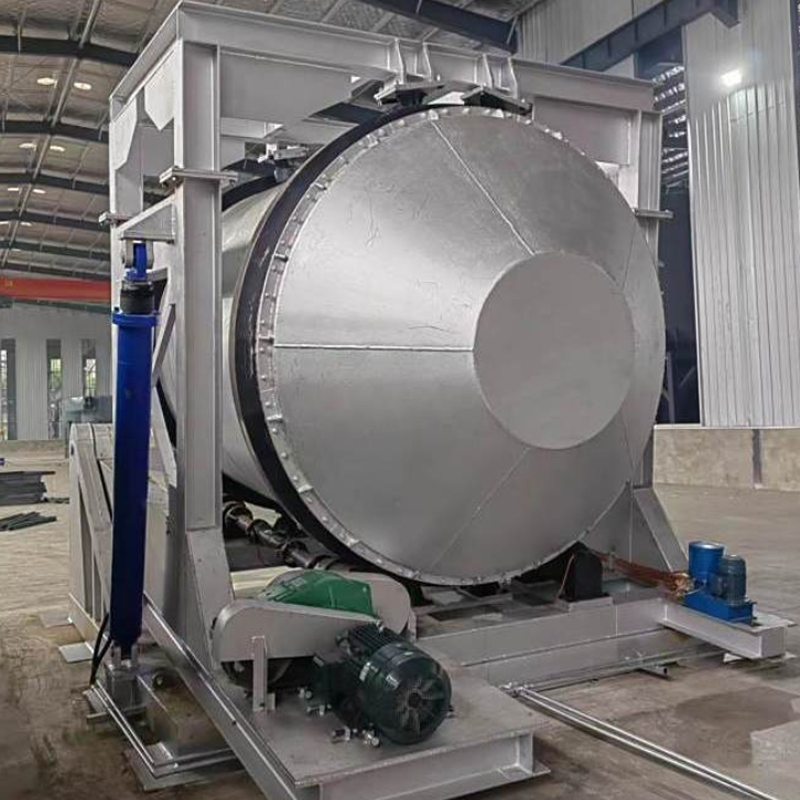
During the initial feeding phase, the material at the kiln tail is heated to temperatures ranging from 300°C to 600°C, causing moisture to evaporate and adsorbed gases to escape. Upon entering the medium-temperature zone (600°C to 1100°C), metallic aluminum melts and agglomerates, facilitating its subsequent recovery; simultaneously, aluminum nitride (AlN) begins to undergo vigorous oxidation, generating aluminum oxide and releasing nitrogen gas—a critical step in eliminating the reactivity and toxicity of the aluminum ash. Once the temperature exceeds 850°C, fluorides react with calcium-based fluorine-fixing agents to form stable calcium fluoride (CaF₂), thereby effectively preventing fluoride ions from leaching out and causing environmental contamination. Within the 1000°C to 1100°C temperature range, the aluminum ash reacts with limestone to produce calcium aluminate.
The high-temperature calcination zone (ranging from 1100°C to 1350°C, with peaks reaching 1450°C to 1500°C) serves as the primary reaction zone. In this region, the material undergoes sintering or partial melting; the oxidation of AlN is fully completed, and the fluorine-fixing reactions reach full completion, ultimately yielding a clinker composed primarily of α-Al₂O₃ and calcium aluminate. Prior to discharge, the clinker is rapidly cooled to below 200°C to inhibit the re-synthesis of harmful substances, such as dioxins.
By precisely controlling parameters such as residence time, kiln inclination, rotational speed, and the maintenance of a slightly negative pressure atmosphere, the secondary aluminum ash rotary kiln ensures both thorough reaction completion and operational safety. When integrated with exhaust gas treatment systems—including dust removal and alkaline scrubbing—this process successfully achieves the detoxification and resource utilization of secondary aluminum ash, standing as a quintessential example of the circular economy applied to the treatment of industrial solid waste.