



NEWS&EVENTS
The core principle of electrolytic copper refining lies in utilizing the differences in standard electrode potentials of metals to achieve purification within a specialized electrolytic cell. The electrolytic cell typically consists of a rectangular concrete tank lined with corrosion-resistant materials; its dimensions vary according to the scale of production, and its interior features a neat arrangement of anodes and cathodes.
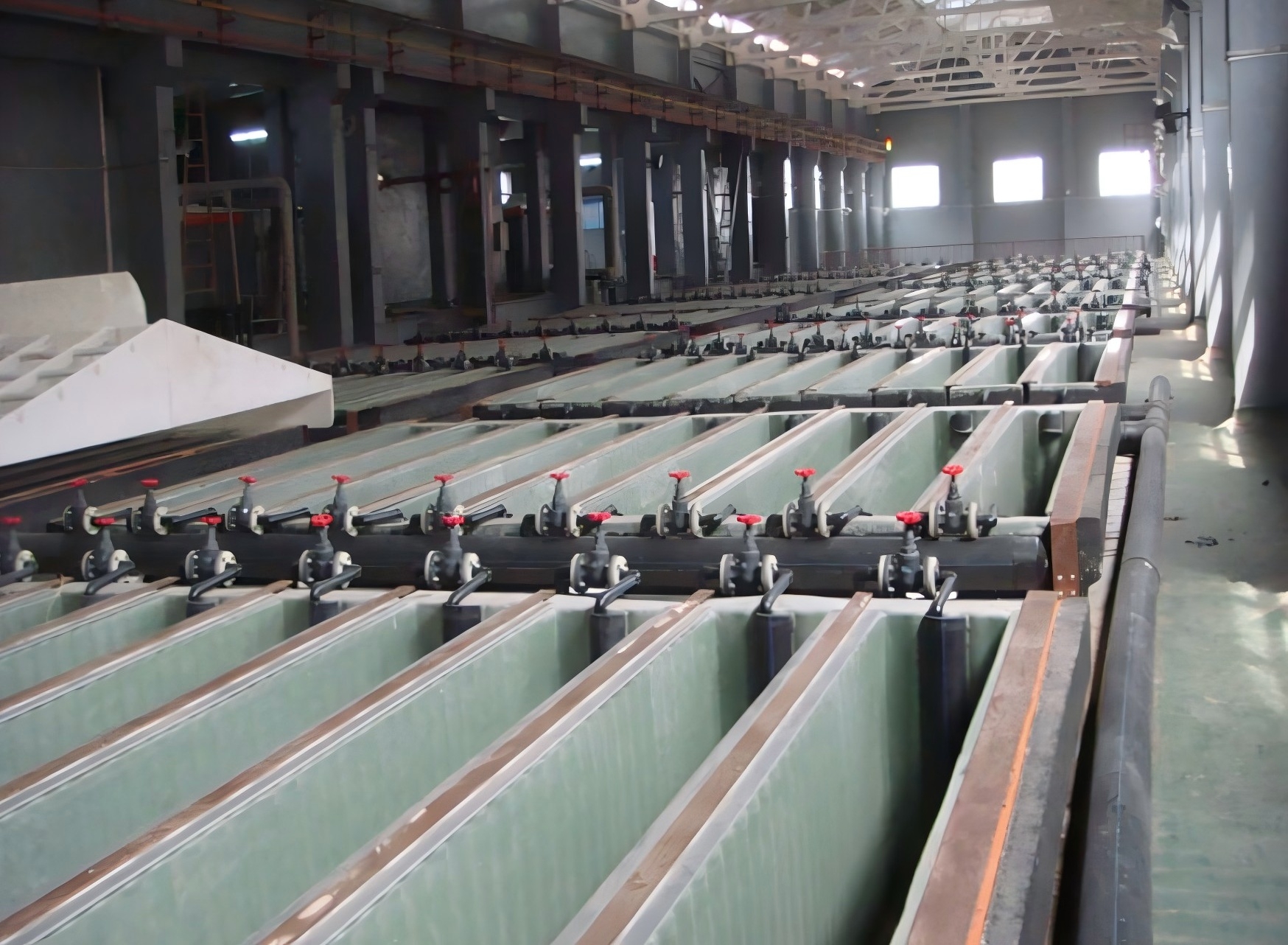
Synergistic Operation of Equipment and Principles:
Electrode System: Crude copper plates serve as anodes and are suspended along one side of the electrolytic cell, while thin sheets of pure copper act as cathodes and are suspended along the opposite side. The anodes and cathodes are arranged in an alternating pattern with a spacing of approximately 50 to 100 mm. Upon the application of electric current, oxidation reactions occur at the anodes; copper—along with metals possessing more negative electrode potentials, such as zinc and iron—dissolves into the electrolyte. Conversely, precious metals such as gold and silver do not dissolve; instead, they settle to the bottom of the tank in the form of "anode slime," collecting in a specially designated conical zone from which they are periodically discharged and recovered.
Electrolyte Circulation System: The electrolyte employed is an acidic copper sulfate solution (acidified with sulfuric acid). Through inlet pipes located at the bottom of the tank and overflow ports situated near the top, the electrolyte is continuously circulated at a rate of 0.5 to 2 liters per minute per tank. This circulation maintains a uniform concentration of copper ions while simultaneously dissipating Joule heating and reaction heat. External heaters and circulation pumps are installed outside the tank to maintain the electrolyte temperature within a range of 55°C to 65°C, thereby enhancing the diffusion rate of copper ions and improving current efficiency.
Conductivity and Electrode Management: The electrolytic cells are interconnected—either in series or in parallel—via copper busbars. A rectifier supplies a low-voltage, high-current power source to the system (typically delivering a voltage of approximately 0.2 to 0.4 V per cell, with a current density of 200 to 300 A/m²). To prevent anode slime from adhering to the cathodes, the cells are frequently equipped with electrode vibration devices or automated stripping units.
Final Outcome: Within the electrolytic cell, pure electrolytic copper—with a purity level of ≥99.99%—is preferentially deposited onto the cathodes, while impurities remain either within the anode slime or dissolved in the electrolyte. By precisely controlling the current, temperature, and circulation flow rate, the entire system achieves both the highly efficient purification of copper and the comprehensive recovery of precious metals.