



NEWS&EVENTS
Home > News&Events > Company news > Selective Separation of Low-Grade Precious Metal Materials via the Chlorination-Volatilization Method
When processing low-grade precious metal materials containing various base metals—such as iron, copper, and zinc—the chloride volatilization method faces a core challenge: many base metal chlorides also exhibit significant volatility. FeCl₃ has a boiling point of 307°C, and ZnCl₂ has one of 732°C; while CuCl₂ possesses a high boiling point of 993°C, it readily decomposes and volatilizes. This implies that during the traditional chloride roasting process, substantial quantities of base metal impurities enter the gas phase alongside the precious metal chlorides, making it difficult to achieve "absolute selectivity" in separation.
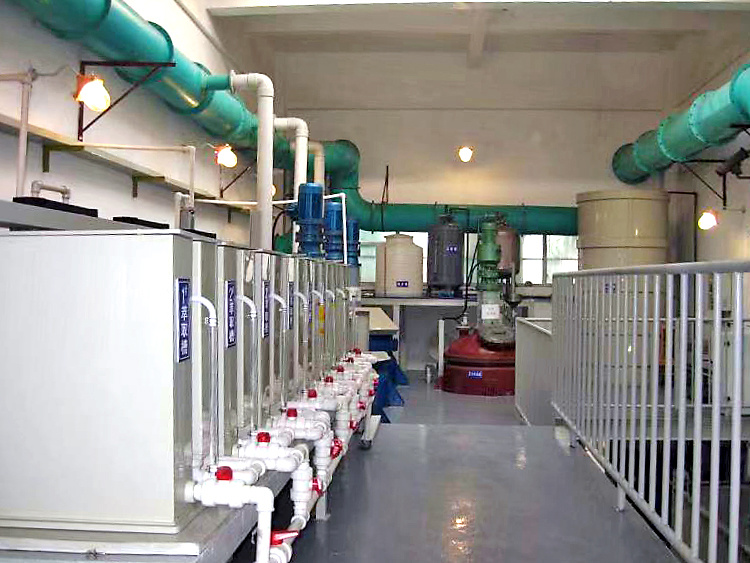
Faced with this dilemma, the industry has not pursued the idealized goal of separating individual substances in isolation; instead, it has developed a pragmatic strategy centered on "multi-stage condensation, supplemented by hydrometallurgical purification."
The core of this strategy lies in exploiting the temperature differentials at which various metal chlorides volatilize and condense. During the high-temperature chloride volatilization stage (typically 800–1000°C), the various metal chlorides within the material vaporize simultaneously. As the flue gas enters a temperature-controlled condensation system, a rough separation is achieved through staged cooling: in the higher temperature range (300–400°C), the majority of FeCl₃ and a portion of the ZnCl₂ condense and precipitate first; subsequently, in the lower temperature range (150–250°C), the chlorides of gold, silver, and platinum-group metals—along with a small amount of residual base metal chlorides—are concentrated.
However, this physical condensation process cannot completely eliminate the phenomenon of co-condensation; consequently, the precious metal concentrate still retains some entrained base metal impurities. Therefore, subsequent hydrometallurgical steps are required: the material collected from the low-temperature stage undergoes selective leaching, wherein the base metal chlorides preferentially dissolve into the solution while the precious metals remain in the solid residue phase, thereby achieving deep purification.
This technological pathway embodies the practical wisdom of industrial metallurgy: rather than striving for an idealized, absolute selectivity, it employs a combined strategy of "staged condensation for rough separation plus hydrometallurgical deep purification" to efficiently extract precious metals from low-grade materials while maintaining controllable costs.