



NEWS&EVENTS
Home > News&Events > Company news > Equipment for treating high-temperature flue gas generated during antimony smelting in rotary furnaces
In the process of smelting antimony in a rotary furnace, high-temperature flue gas is not merely industrial waste but represents an invisible value-generating stream. The scorching gas exiting the furnace carries significant amounts of vaporized antimony trioxide; if managed correctly, this becomes a valuable intermediate product, whereas uncontrolled release turns it into an environmental burden. Consequently, the flue gas treatment system is not merely an accessory to the rotary furnace but a critical component deeply integrated with it.
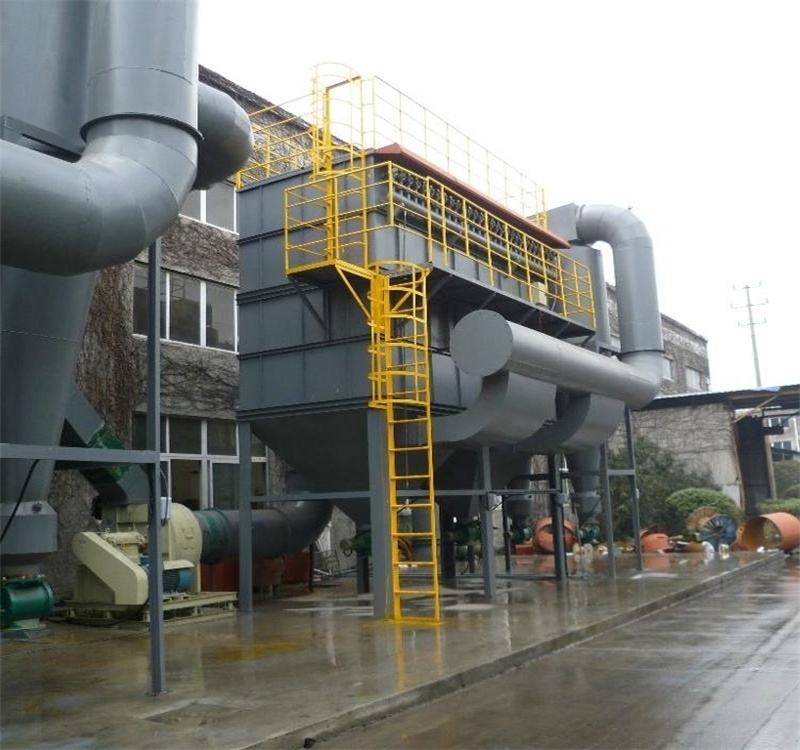
The flue gas first enters an annular flue, where preliminary cooling and dust settling occur. This seemingly simple step embodies technical sophistication: the cooling rate directly influences the morphology of the antimony trioxide crystals formed subsequently, as rates that are either too fast or too slow alter particle size distribution and purity. Next, the gas enters a dust collector—typically a baghouse—tasked with the core mission of recovering antimony trioxide. Given the high volatility of antimony trioxide at elevated temperatures, balancing flue gas temperature and dust collection efficiency is the technical crux of optimizing product yield versus environmental emissions. Excessive temperatures allow antimony trioxide to penetrate the filter bags and escape, while excessively low temperatures risk condensation and bag blinding; both scenarios cause a sharp drop in collection efficiency. Finally, a desulfurization tower removes sulfur dioxide, ensuring tail gas emissions meet regulatory standards.
This process reveals a simple yet profound engineering principle: the rotary furnace does not operate in isolation but forms an integrated whole with the dust collection and desulfurization systems. Decisions regarding flue gas cooling rates and the selection of dust collector types determine not only the form and economic value of the recovered product but also the smelting enterprise's ability to meet environmental compliance standards. Understanding this interconnected relationship is the starting point for optimizing antimony smelting processes and is key to achieving efficient resource utilization and clean production.