



NEWS&EVENTS
Home > News&Events > Company news > The rotary kiln: a key piece of equipment in the antimony ore smelting process.
In the process of converting antimony ore into high-purity antimony products, the rotary kiln serves as a crucial piece of initial processing equipment. It functions not only as a reactor for roasting and desulfurization but also forms an energy-cycling system with the rotary furnace, laying the foundation for the efficient and environmentally friendly operation of the entire production line.
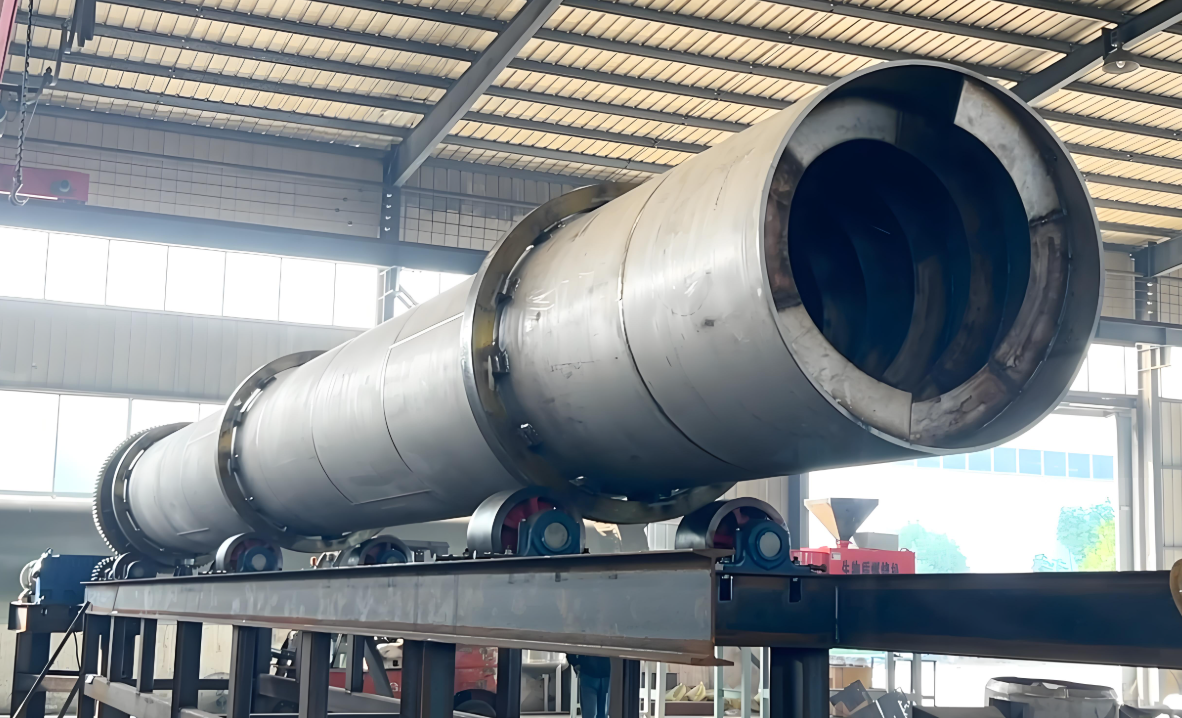
Antimony ore is fed into the rotary kiln via a belt conveyor, where it undergoes uniform tumbling and roasting at temperatures between 800°C and 900°C to effectively remove sulfur. Precise temperature control ensures thorough desulfurization without the loss of valuable metals, yielding stable, high-quality calcine for subsequent smelting stages.
The unique value of the rotary kiln lies in its thermal integration with the rotary furnace. High-temperature flue gas generated during the smelting of crude antimony in the rotary furnace is channeled into the rotary kiln's jacket, serving as a direct heat source for the roasting process. This design thermodynamically integrates two energy-intensive stages, thereby reducing overall energy consumption and enabling energy recycling.
The quality of the rotary kiln's output directly dictates the performance of all subsequent stages; any deviation in the desulfurization rate or the oxidation state of the product triggers a chain reaction affecting the reduction efficiency of the rotary furnace and the recovery rate of volatilized antimony trioxide. Meanwhile, high-temperature flue gas discharged from the kiln is cooled via an annular flue, passes through a dust collector to recover associated antimony trioxide, and finally enters a desulfurization tower for purification, thereby mitigating environmental impact at the source.
In the field of antimony metallurgy, although the rotary kiln does not directly produce the final antimony ingots or antimony trioxide powder, its stable and reliable roasting capability underpins the entire refining and shaping process. It enables the production of crude antimony and provides a solid starting point for modern, efficient, and clean antimony production processes.