



NEWS&EVENTS
The operational process for electrolytic copper equipment centers on four key stages: cell loading, electrolytic processing, cathode harvesting (stripping), and electrolyte circulation control.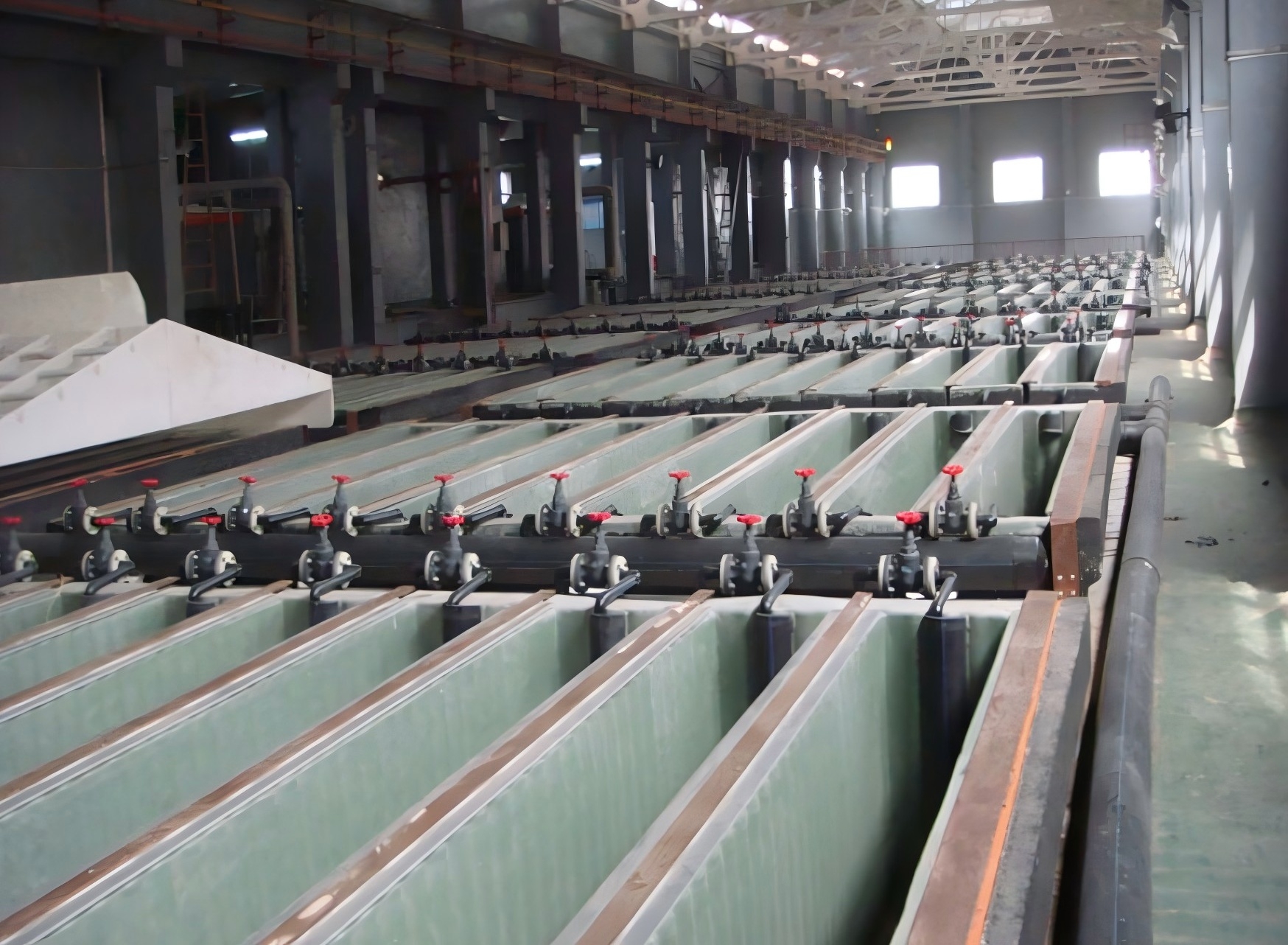
Cell Loading: An electrode spacing unit arranges crude copper anodes and pure copper starter sheets (or stainless steel permanent cathodes) at a preset spacing. A multifunctional crane then transfers and installs them into the electrolytic cell, maintaining a positioning accuracy of ±10 mm to ensure electrode verticality and uniform spacing.
Electrolytic Processing: Copper sulfate and sulfuric acid electrolyte are introduced, and a DC power supply is connected. Copper ions dissolve from the anode, while high-purity copper is deposited at the cathode. The standard electrolysis cycle is 7 days, though high-current-density processes can reduce this to 5 days, requiring corresponding adjustments to current parameters to maintain deposit quality.
Harvesting and Stripping: Upon cycle completion, the power is cut and residual charge is discharged via short-circuiting. Cathode plates are then lifted and transferred to a stripping unit for automatic separation and washing to yield the final electrolytic copper product; spent anode plates are removed, washed, and returned to the smelting process for reuse.
Circulation and Automatic Control: The circulation system utilizes pumps, heat exchangers, and filters to maintain electrolyte concentration, temperature, and purity, employing bidirectional parallel-flow technology to ensure balanced flow rates. A PLC and touchscreen system automatically monitors parameters such as current density, electrolyte temperature, and flow rate, enabling real-time adjustments and alarm functions to ensure continuous, stable production.
In summary, the electrolytic copper operation process—centered on precise cell loading, controllable electrodeposition parameters, efficient post-harvesting treatment, and a reliable circulation control system—enables the large-scale, automated production of high-purity cathode copper from crude copper.