



NEWS&EVENTS
Home > News&Events > Company news > How are the specifications for antimony rotary furnace equipment determined?
Determining the specifications for an antimony rotary furnace is a customized systems engineering task that requires a comprehensive assessment of three key factors: ore characteristics, the target product, and production capacity.
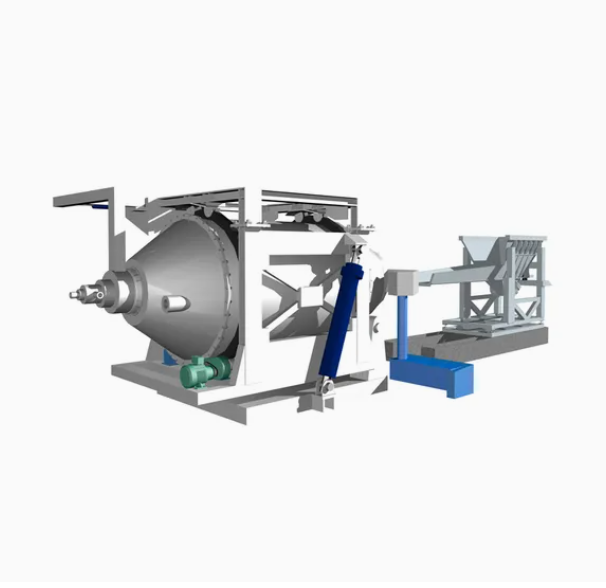
Ore characteristics (foundational basis): Physical properties—such as particle size and bulk density—dictate the choice of furnace type; chemical and thermal parameters—such as reaction temperature and heat transfer efficiency—influence furnace chamber design; and the fuel type (coal, gas, or oil) must be matched to the ore characteristics to ensure the required temperature field and atmosphere are achieved.
Target product (process-oriented): Production of metallic products prioritizes slag-metal separation and temperature uniformity, whereas oxide production requires enhanced temperature control and oxygen supply intensity during the oxidation stage. Requirements regarding product purity and crystalline phase determine the residence time within the furnace and the precision of temperature control.
Production capacity (model definition): Target output directly determines the furnace diameter, length, and auxiliary systems. Significant differences exist between small-scale pilot lines and large-scale production lines regarding drive power, cooling methods, and the level of automation.
The scientific process for selecting an antimony rotary furnace is as follows:
① Preliminary design: Calculate furnace specifications (inner diameter and length) based on output targets, and determine basic parameters such as inclination (3%–5%) and rotational speed (0.3–1.5 rpm).
② Experimental verification (critical step): Representative ore samples must be tested to determine actual reaction temperatures and residence times through small-scale roasting trials. This serves as the core basis for mitigating design risks and ensuring that the furnace meets performance standards upon commissioning.
In summary, the final specifications for an antimony rotary furnace must be determined by combining theoretical calculations with experimental data to ensure efficient, low-consumption, and clean operation.