



NEWS&EVENTS
Home > News&Events > Company news > How can heat loss be reduced and thermal efficiency improved when smelting antimony in a rotary furnace?
Improving the thermal efficiency of antimony rotary furnaces is crucial for reducing production costs. This is achieved through a systematic, three-pronged approach involving source-based insulation, process control, and end-stage recovery:
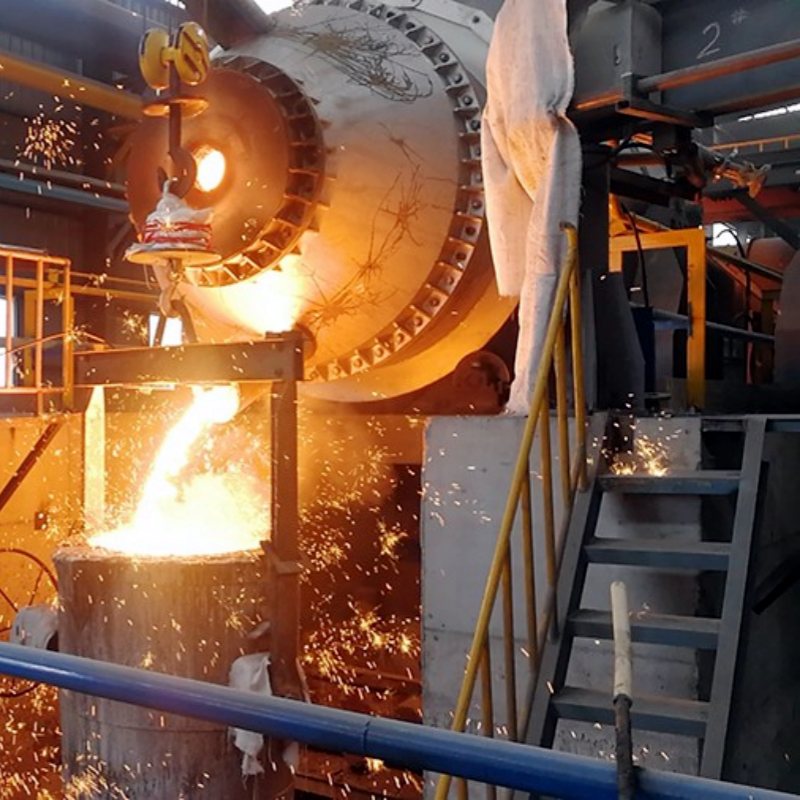
1. Source-based insulation: Composite furnace lining and structural optimization
The furnace employs a multi-layer composite refractory and insulation structure. The working layer utilizes erosion-resistant high-alumina or magnesia-chrome bricks, while the outer layers incorporate nano-microporous insulation boards or lightweight insulating bricks. This composite lining, characterized by low thermal conductivity and high thermal shock resistance, significantly reduces heat loss through the furnace walls. Simultaneously, optimizing the furnace's length-to-diameter ratio and shell wall thickness minimizes the surface area for unproductive heat storage while maintaining mechanical strength.
2. Process control: Oxygen-enriched combustion and intelligent temperature control
Moving away from traditional excess-air combustion, oxygen-enriched combustion technology is adopted to reduce heat loss carried away by heated nitrogen, thereby significantly raising flame temperature and thermal efficiency. An intelligent PLC/DCS temperature control system precisely regulates fuel supply based on material reaction kinetics, preventing fuel waste and antimony volatilization losses caused by excessive temperatures.
3. End-stage recovery: Cascaded utilization of high-temperature flue gas waste heat
The high-temperature flue gas (exceeding 1000°C) discharged from the rotary furnace contains substantial sensible heat. A waste heat boiler recovers heat from the high-temperature section to generate steam for plant heating or power generation, while flue gas from the medium-temperature section is fed into the rotary kiln as a heat source for roasting, creating a closed-loop system for cascaded waste heat utilization.
Through the synergistic integration of furnace insulation, oxygen-enriched combustion, and waste heat recovery, the overall thermal efficiency of modern large-scale antimony rotary furnaces is vastly improved compared to traditional models, leading to a significant reduction in energy consumption per ton of antimony produced.