



NEWS&EVENTS
The rotary casting system is a critical upstream component at the beginning of the copper electrolytic refining production line; the quality of the anode plates it produces directly determines the current efficiency in the subsequent electrolytic cells and the quality of the final copper cathode product. This system continuously casts molten copper into anode plates that meet the standards for cell loading, serving as a vital part of the overall electrolytic copper equipment infrastructure.
The main equipment components and process flow are as follows:
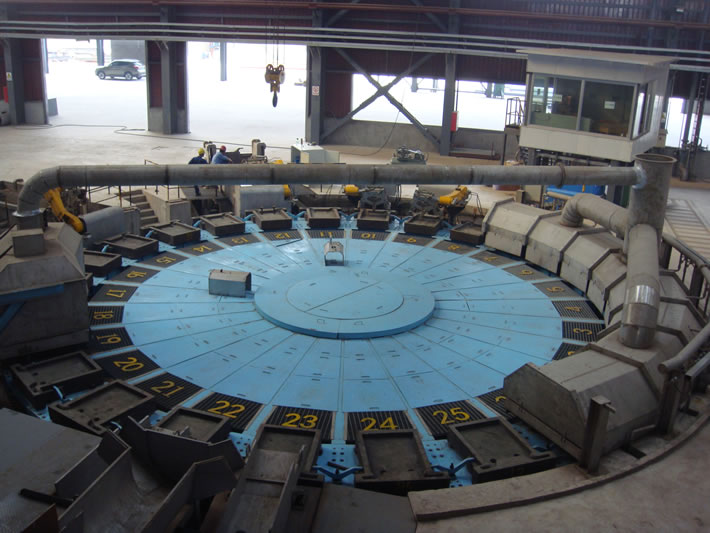
Tundish and casting ladle: The tundish acts as a buffer and temporary storage vessel to ensure a stable supply of molten copper. The casting ladle sits on a precision electronic scale and dispenses a metered amount of copper into the molds—adhering to strict process requirements regarding anode weight and thickness—to ensure consistent dissolution rates during electrolytic refining.
Casting wheel: A large rotary platform carries multiple molds; as it rotates, it sequentially transports the cast molds to stations for cooling and demolding, enabling continuous production synchronized with the cell-loading pace of the electrolysis workshop.
Auxiliary systems: These include a spray cooling system (which forcibly cools the molds to control crystalline structure) and an automatic mold coating system (which applies a release agent to prevent sticking). These systems ensure a smooth anode surface and minimize the risk of short circuits during electrolysis.
Plate extraction and stacking unit: An extractor removes qualified anode plates from the molds, while an automatic reject mechanism removes substandard ones. Qualified plates are cooled in a water tank and neatly stacked, awaiting transfer to the anode preparation unit for flattening, lug milling, and other pre-processing steps, before finally being loaded into electrolytic cells and paired with permanent cathodes (or starter sheets) for the electrolysis process.
The entire system operates through the precise coordination of hydraulic, pneumatic, and PLC-based electronic control systems, achieving fully automated operation from casting to stacking and ensuring the supply of high-quality anode plates for efficient, stable copper electrolysis production.