



NEWS&EVENTS
Electrolytic refining is the core stage of electrolytic copper production. Regardless of whether pyrometallurgy or hydrometallurgy is employed, the final step to obtain high-purity cathode copper (with a purity exceeding 99.95%) is the electrolysis process.
During electrolytic refining, anode plates produced via pyrometallurgy or starter sheets prepared via hydrometallurgy serve as the anodes, while stainless steel plates or copper starter sheets serve as the cathodes; these are immersed in an electrolyte containing copper sulfate and sulfuric acid. Under the influence of direct current, the anode copper continuously dissolves; copper ions gain electrons at the cathode to deposit as high-purity copper, while precious metal impurities—such as gold and silver—settle into the anode slime, becoming valuable by-products.
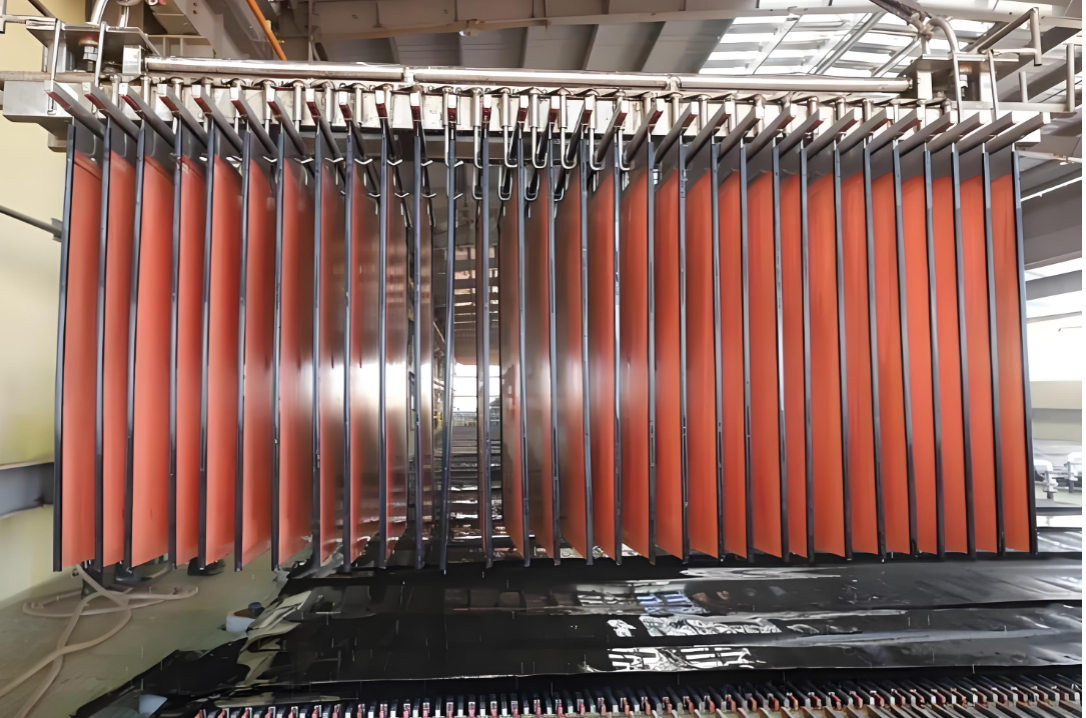
Controlling process parameters is crucial for ensuring cathode quality. Maintaining current density between 200 and 300 A/m² and electrolyte temperature between 50 and 60°C effectively reduces energy consumption and enhances current efficiency. The electrode spacing is set at 90–110 mm, and the electrolyte undergoes continuous circulation and filtration to maintain stable copper ion concentrations (40–50 g/L) and acidity levels (180–200 g/L). The anode cycle lasts 7–28 days, while the cathode cycle lasts 5–14 days.
Modern electrolytic workshops widely utilize automated control systems and large-electrode technology; these innovations not only significantly boost output per cell but also improve the consistency of product quality. As the final link in both pyrometallurgical and hydrometallurgical process chains, electrolytic refining directly determines the market competitiveness and overall recovery value of the electrolytic copper, making it a top priority for copper smelting enterprises seeking to improve quality and efficiency.