



NEWS&EVENTS
Home > News&Events > Company news > Structural Design of Tilting Rectangular Aluminum Melting Furnaces
Tilting rectangular aluminum melting furnaces are widely used in the aluminum processing industry, and their structural design directly affects operational safety, melting efficiency, and ease of operation. The following systematically describes the structural design of this furnace type from four aspects: metal components and furnace body structure, tapping spout design, melting chamber door construction, and charging port configuration.
The outer shell and base plate of the continuous melting and holding furnace are both made of steel plates and reinforced with channel steel and angle steel. Apart from some structures connected by bolts, the overall construction is basically metal welding, ensuring the strength and stability of the furnace body.
The tapping spout adopts a tilting discharge, launder-type design and is used together with a ladle, facilitating the safe transfer and pouring of aluminum liquid.
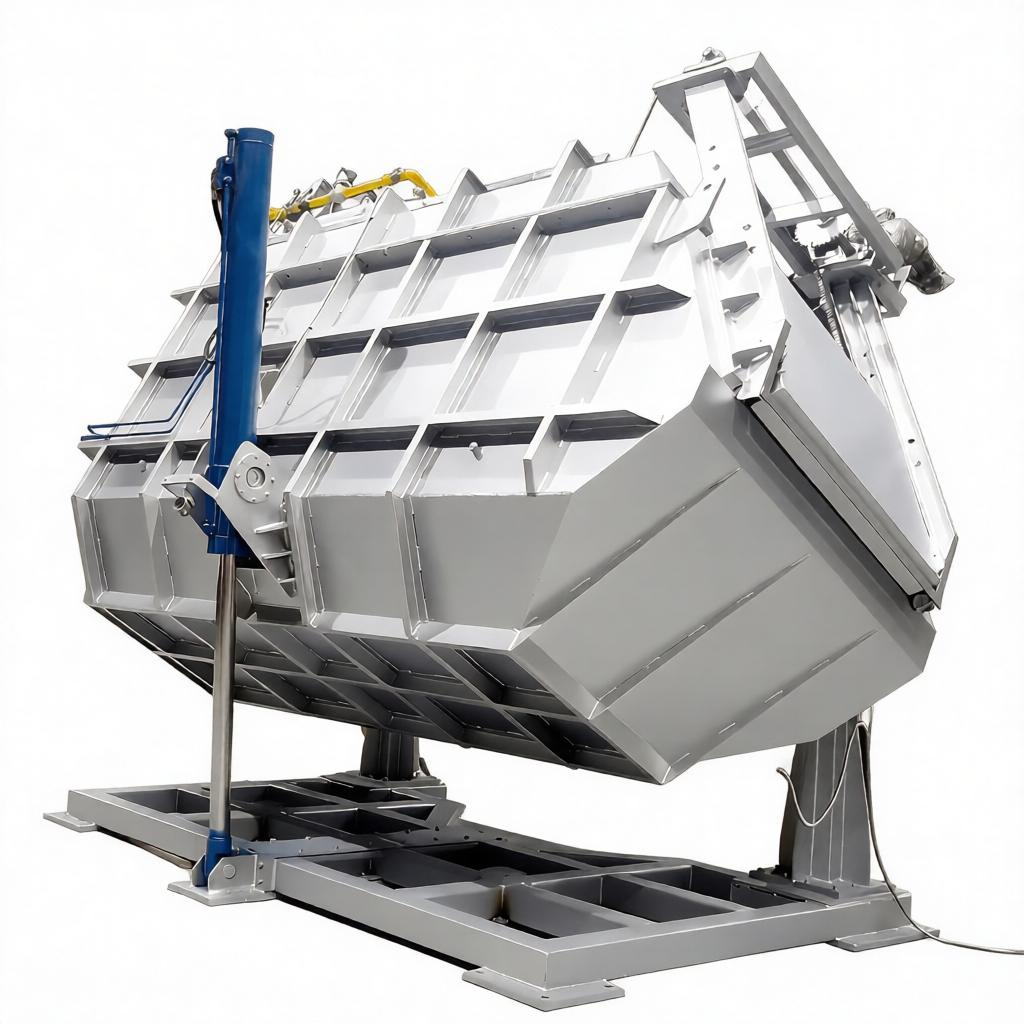
The door frames around each furnace door are made of metal components, and the door faces use ordinary steel plates. The refractory material on the inner side of the doors is cast from insulation board plus high-temperature castable, balancing thermal insulation and durability.
The charging port supports two methods: an optional external charging car can feed material from the furnace opening, or manual feeding can be used, flexibly adapting to different production scenarios.
In summary, the tilting rectangular aluminum melting furnace has formed a relatively complete design system in terms of furnace body load-bearing reinforcement, tapping and transfer, furnace door insulation, and charging flexibility. The structural elements work together to meet the basic insulation and safety requirements of the aluminum melting process and provide adaptable space for operating methods at different production scales, offering strong practicality and promotional value.