



NEWS&EVENTS
Home > News&Events > Company news > Process for Producing Antimony Trioxide Powder Using an Antimony Rotary Refining Furnace
Antimony trioxide (also known as "antimony white") is a widely used synergistic flame-retardant powder. The primary industrial production route involves a pyrometallurgical oxidation process in a rotary refining furnace, where the powder is recovered through a sequence of volatilization and flue-gas capture.
During production, molten antimony is fed into a rotary refining (oxidation) furnace, where it reacts with oxygen at high temperatures to form antimony trioxide. As antimony trioxide is highly volatile at these temperatures, it transitions into a gaseous state and exits the furnace along with the flue gas.
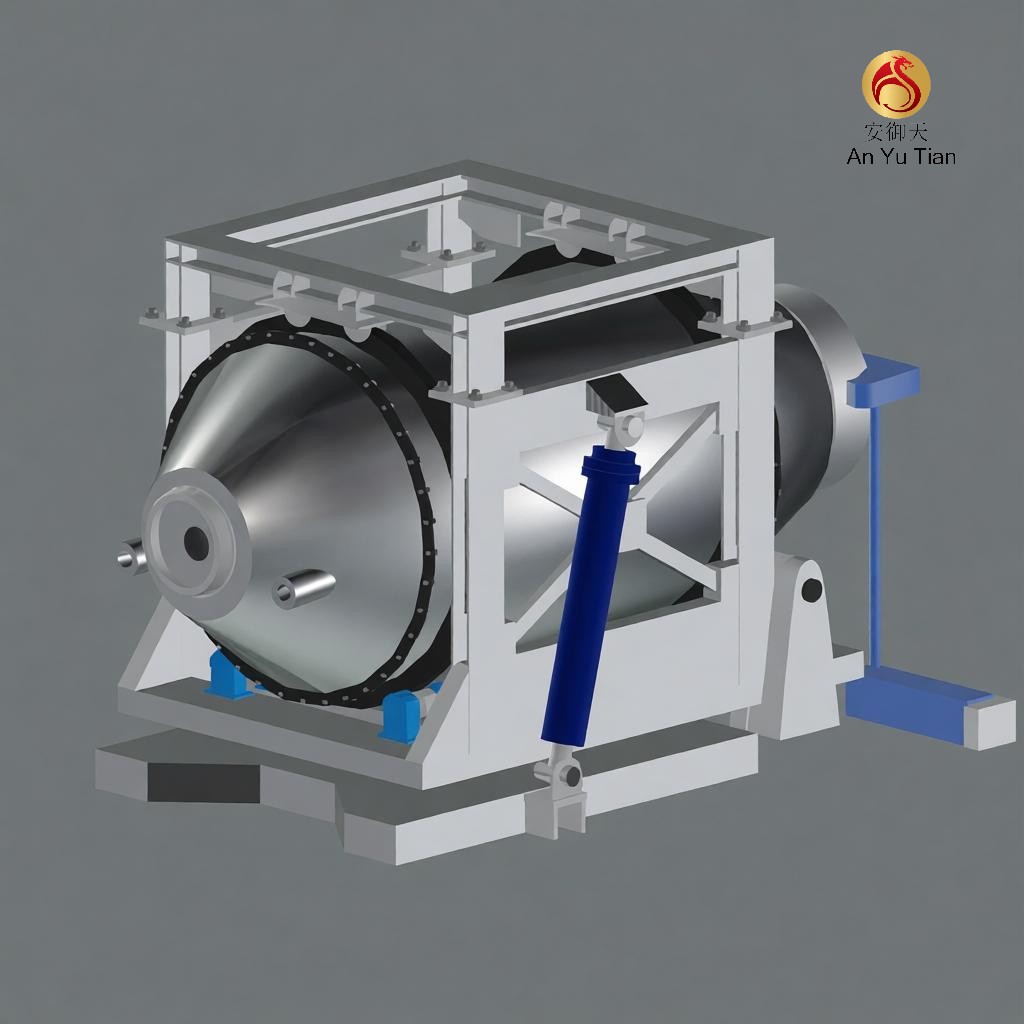
The flue gas, carrying the gaseous antimony trioxide, is directed to a downstream dust-collection system. As the gas cools, the antimony trioxide condenses into fine solid particles, which are then captured and retained by the dust-collection equipment, yielding the final antimony trioxide powder product. This method—combining flue-gas transport with dust collection—ensures a stable process and a high recovery rate of the powder.
The rotary refining furnace process offers excellent controllability, enabling the consistent production of antimony trioxide powder with uniform particle size and stable quality. The product is primarily used in applications such as flame-retardant composite materials and chemical catalysis. Furthermore, the flue gas undergoes purification to meet emission standards, ensuring a balance between production efficiency and environmental compliance.