



NEWS&EVENTS
Home > News&Events > Company news > Collaborative process of rotary kiln and rotary furnace in antimony smelting
The combined process of "rotary kiln+rotary furnace" is used in antimony ore smelting, which focuses on optimizing reaction conditions step by step to achieve efficient separation and coordination of desulfurization and reduction, which is difficult to achieve with a single device.
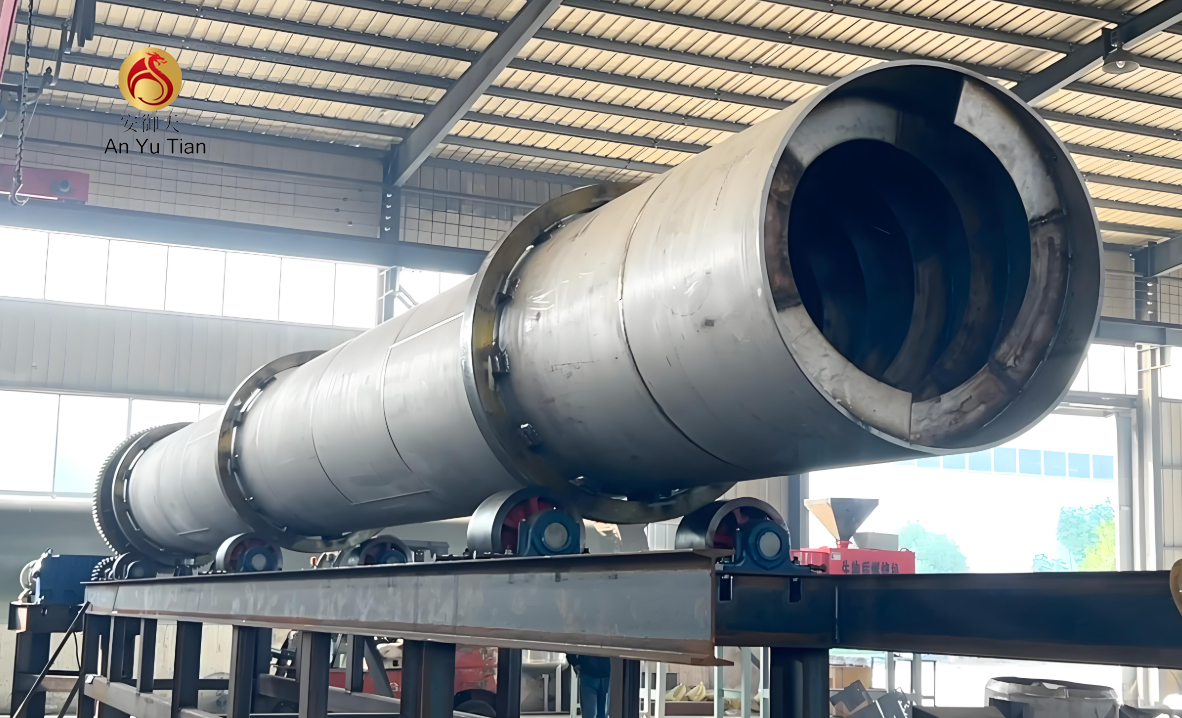
Desulfurization (oxidation roasting) and reduction are two metallurgical steps that require completely opposite atmospheres. Desulfurization needs to be carried out in an oxidizing atmosphere to convert antimony sulfide in antimony ore into antimony oxide and release sulfur dioxide. The temperature during this process is usually controlled at 850-1000 ℃. If desulfurization is not thorough, residual sulfur will interfere with subsequent reduction and increase environmental burden. The reduction needs to be carried out under a strong reducing atmosphere, reducing antimony oxide to metallic antimony at a temperature of about 1000-1200 ℃.
If these two steps are completed continuously within a single device, atmosphere control will be extremely difficult: the air introduced during the oxidation stage will destroy the atmosphere required for reduction, and the reducing gas generated during the reduction stage will interfere with the desulfurization reaction in reverse. This atmosphere conflict can lead to a significant decrease in reaction efficiency, low desulfurization rate, incomplete reduction, reduced metal recovery rate, and easier entry of impurities into the product, affecting the purity of antimony ingots.
By setting up a rotary kiln and a rotary furnace separately, the parameters of each stage can be precisely controlled:
Rotary kilns focus on desulfurization, optimizing roasting temperature, air supply, and residence time to achieve efficient desulfurization and provide stable roasted sand for the reduction process.
The rotary furnace focuses on reduction and can independently control the ratio of reducing agents, temperature, and stirring intensity to ensure efficient reduction and aggregation of metals.
This division of labor achieves optimal reaction conditions in each stage, not only improving the yield and product purity of antimony, but also reducing energy consumption due to the compact process. At the same time, sulfur dioxide can be collected and used for acid production in rotary kilns, reducing environmental pollution and reflecting the engineering wisdom of "step-by-step optimization and collaborative efficiency" in metallurgical processes.