



NEWS&EVENTS
Home > News&Events > Company news > The impact of rotary kiln temperature control on the quality of antimony products.
In antimony oxide production, the temperature control of the rotary kiln and the refining oxidation furnace directly determines the yield, purity, and physical quality of the final product.
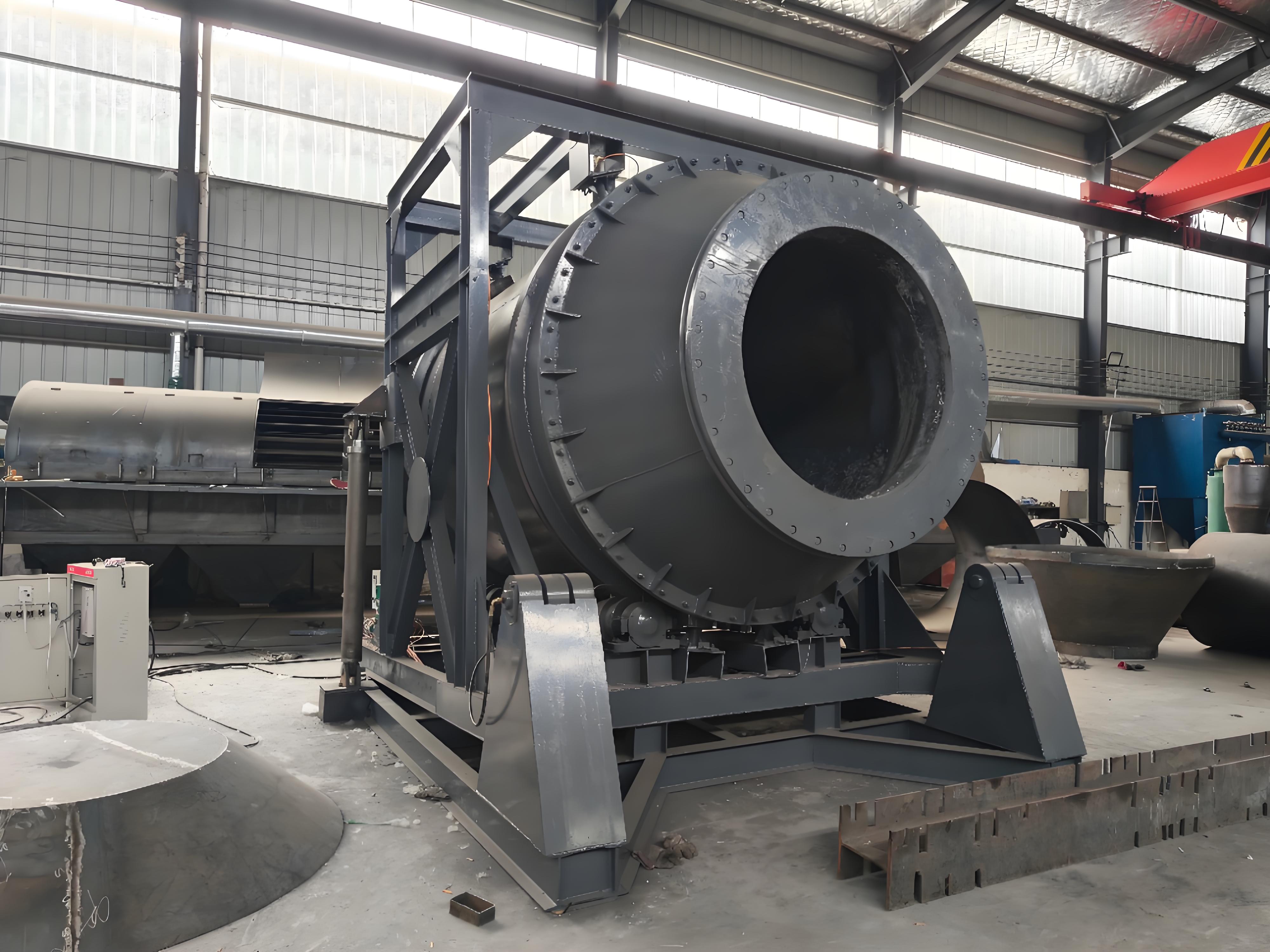
The rotary kiln, as a key piece of equipment for high-temperature reduction smelting, requires precise temperature control. If the temperature is too low, the reduction reaction of antimony oxide powder will be incomplete, leading to a higher antimony content in the slag, directly affecting the recovery rate of metallic antimony, leaving impurity risks for subsequent processes, and reducing the total yield of antimony oxide. Conversely, if the temperature is too high, although it can increase the reaction rate, it may exacerbate furnace lining erosion, increase the risk of impurity element contamination, and lead to a surge in energy consumption. More importantly, unstable temperatures will cause fluctuations in the composition of the reduced crude antimony, and its uneven purity will directly lead to a decrease in the purity of the final antimony oxide powder.
The temperature of the refining oxidation furnace (oxidation furnace) governs the efficiency of oxidation volatilization and the physical characteristics of the product. If the temperature is too low, the volatilization rate of antimony trioxide is slow, resulting in low production efficiency, and may lead to incomplete volatilization, affecting the yield. More seriously, the oxide powder formed at low temperatures often has a coarser particle size and insufficient whiteness, resulting in a lower product grade. While a higher temperature can accelerate volatilization, the excessively rapid crystallization process can easily broaden the particle size distribution of the powder, potentially leading to some excessively fine particles or agglomeration. At the same time, excessively high temperatures may cause changes in the crystal form of the powder or introduce color variations, thus damaging whiteness and uniformity, and affecting the product's application in high-end fields.
Therefore, precise and stable temperature control is not simply a process parameter; it is the cornerstone for ensuring high yield, high purity, and superior performance of antimony oxide. As a professional manufacturer of rotary kiln equipment, we are committed to providing our customers with reliable rotary kiln systems that can achieve precise temperature control and efficient operation.