



NEWS&EVENTS
Home > News&Events > Company news > Detailed explanation of the key processes in copper recycling furnaces for processing scrap copper materials.
The process of smelting recycled copper in a copper smelting furnace is a typical pyrometallurgical process, aiming to purify various types of scrap copper (including pure copper, brass scrap, and low-grade copper) into high-purity copper products (usually anode copper, for further electrolytic refining). The key steps are interconnected and mainly include the following:
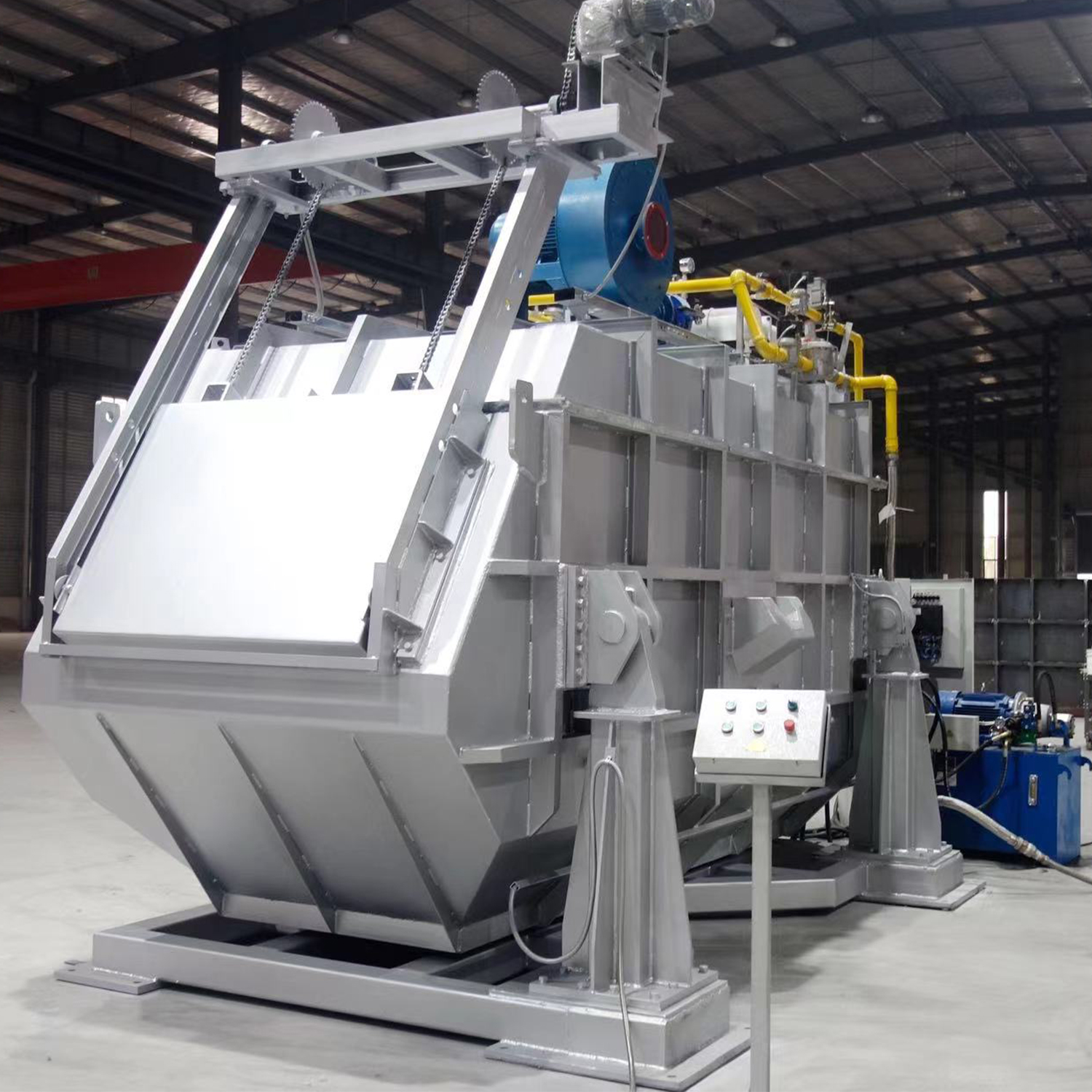
First, pretreatment and batching are fundamental. Scrap copper needs to be disassembled, crushed, and sorted to remove impurities, and then compacted. Fluxes and reducing agents are precisely added according to the composition to create stable conditions for smelting.
In the smelting stage, the furnace charge melts at high temperatures, forming a copper melt. Most light impurities react with the flux to form slag, which is then removed through slagging, achieving initial separation.
Next is oxidative refining (blowing), which determines the purity of the copper. Air or oxygen-enriched air is blown into the molten copper, causing harmful impurities such as tin, lead, and zinc to oxidize preferentially. The resulting oxides enter the slag layer or are volatilized and removed. This process requires multiple slagging and deslagging steps until the impurity content meets the required standards.
The oxidized copper melt contains excess oxygen and requires reductive refining. A reducing agent is introduced to reduce cuprous oxide to copper, effectively lowering the oxygen content and obtaining a copper melt with the correct composition.
The refined copper melt is then cast in a casting machine, where it cools and solidifies to form anode plates suitable for electrolytic refining.
Throughout the entire process, a flue gas treatment and environmental recycling system is in place. The high-temperature flue gas generated during smelting is subjected to waste heat recovery, cooling, dust removal, and desulfurization before being discharged in compliance with environmental standards. The collected dust is rich in valuable elements such as zinc and lead, which can be further utilized.
In summary, recycled copper smelting, through this series of physical and chemical reactions, achieves efficient purification of scrap copper resources, not only producing high-value copper products but also embodying the important concepts of circular economy and green smelting.