



NEWS&EVENTS
Home > News&Events > Company news > The role of copper electrolytic cells in copper cathode production.
The electrolytic cell is the core component of the electrolytic refining system. It is typically made of corrosion-resistant materials (such as concrete lined with plastic or fiberglass) and contains an electrolyte solution with anode and cathode plates arranged in an orderly manner.
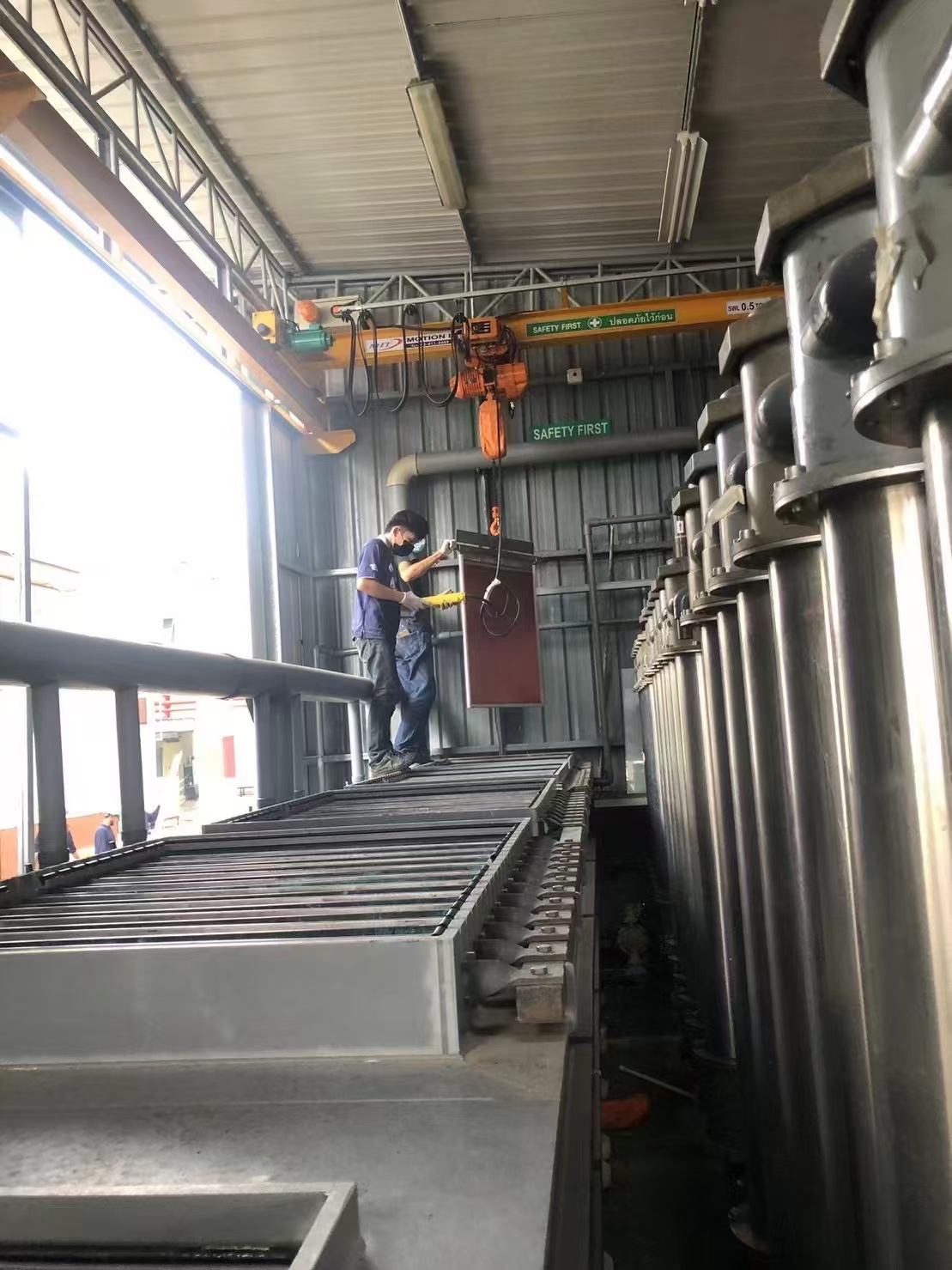
Main functions:
1. Providing a site for electrochemical reactions: The electrolytic cell is a closed or open container filled with an electrolyte solution (usually a mixture of copper sulfate and sulfuric acid), creating the necessary chemical environment for the dissolution and deposition of copper.
2. Achieving electrolytic purification of copper:
Anode process: After applying direct current, the copper in the anode plate (made of crude copper) undergoes an oxidation reaction, losing electrons and dissolving into the electrolyte solution as copper ions (Cu²⁺).
Cathode process: Copper ions in the electrolyte solution gain electrons at the cathode plate (usually a pure copper starting sheet or a stainless steel mother plate), reducing and depositing high-purity electrolytic copper.
3. Separating impurities:
Electrolyte purification: Metal impurities more reactive than copper (such as iron and zinc) enter the electrolyte solution along with copper ions, but do not deposit at the cathode. Instead, they accumulate in the solution and are removed through subsequent purification treatment.
Anode slime formation: Impurities less reactive than copper (such as gold, silver, and lead) do not dissolve, but attach to the anode surface or the bottom of the cell as solid precipitates, forming "anode slime," which can be used as a raw material for precious metal recovery.
Additional points:
Production continuity: Electrolytic cells are usually arranged in series or parallel to form large electrolytic workshops, enabling continuous large-scale production.
Energy consumption and efficiency: The design and operating conditions of the electrolytic cell (such as current density, temperature, and electrolyte circulation) directly affect energy consumption and copper recovery efficiency.
Environmental protection and safety: Modern electrolytic cell systems are equipped with ventilation, waste liquid treatment, and automated control devices to reduce the emission of harmful gases (such as acid mist) and ensure production safety.