



NEWS&EVENTS
Home > News&Events > Company news > What are the differences between a rotary refining furnace and a rotary kiln in antimony smelting processes?
Rotary kilns and rotary refining furnaces are two key rotary devices in antimony pyrometallurgy, but they differ fundamentally in their functions, operating conditions, and chemical purposes within the process flow, together forming a continuous process for antimony smelting.
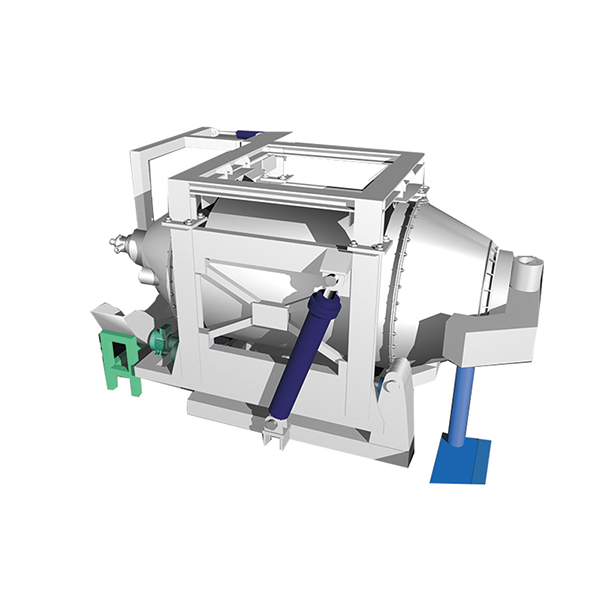
1. Core Functions and Process Objectives
The rotary kiln performs pretreatment roasting, oxidizing and removing sulfur from antimony sulfide ore in an oxidizing atmosphere at 800-900°C, producing antimony oxide and sulfur dioxide flue gas for acid production, but not producing metallic antimony. The rotary refining furnace performs reduction smelting and refining, using antimony oxide as raw material. Under high temperature and controlled atmosphere, a reducing agent is added to produce crude antimony, and then the atmosphere is adjusted to remove impurities and purify the metal.
2. Operating Conditions and the Nature of Chemical Reactions
In terms of atmosphere control, the rotary kiln requires a strong oxidizing atmosphere, while the rotary refining furnace successively undergoes reducing and weakly oxidizing stages; in terms of temperature and reactions, the rotary kiln operates at medium temperature oxidation, while the rotary refining furnace operates at higher temperatures with a more complex reaction system; in terms of raw materials and products, the rotary kiln processes solid sulfide concentrates, producing solid antimony oxide and sulfur-containing flue gas, while the rotary refining furnace processes solid antimony oxide, producing liquid crude/refined antimony and slag, which is the key step in metal production.
3. Position and Role in the Smelting Process
The two are connected in series in the antimony smelting process. The rotary kiln acts as a pretreatment unit at the front end, and the rotary refining furnace acts as the core smelting unit at the back end. The process is sequential, functionally complementary, and irreplaceable.
In summary, the fundamental difference lies in: the rotary kiln is a desulfurization oxidation furnace, preparing qualified raw materials for metal extraction; the rotary refining furnace is a metal reduction and refining furnace, directly realizing the transformation from compound to pure metal. The former solves the "desulfurization" problem, and the latter solves the "antimony extraction" problem, together forming a complete technical chain for pyrometallurgical antimony smelting.