



NEWS&EVENTS
Home > News&Events > Company news > What advantages does a rectangular furnace have over a circular furnace in terms of aluminum melt circulation?
In the field of molten aluminum circulation, rectangular furnaces demonstrate significant advantages compared to circular furnaces, primarily due to their furnace chamber shape, which facilitates the design of directional flow channels, thereby optimizing molten aluminum circulation.
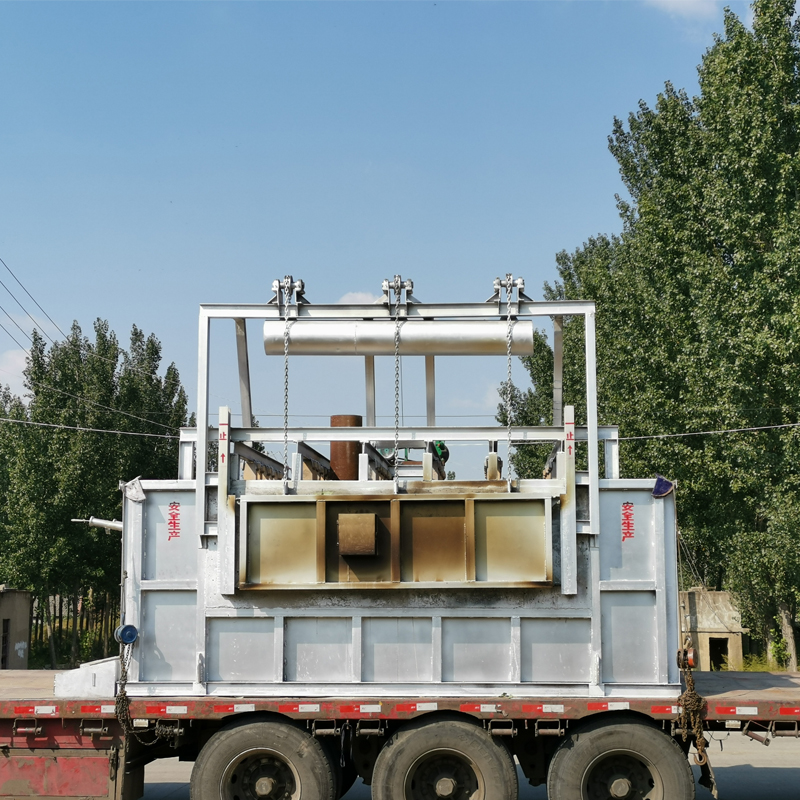
The regular structure of the rectangular furnace chamber provides an ideal foundation for the design of directional flow channels. By rationally planning the internal space of the furnace chamber, clear and orderly molten aluminum flow paths can be created. This directional flow channel guides the molten aluminum to flow in a predetermined direction, preventing disordered and turbulent circulation within the furnace, resulting in more efficient and stable molten aluminum circulation.
Rectangular furnaces can employ various methods to achieve directional molten aluminum flow. A common and effective method is the bottom inclination design. By setting a certain inclination angle at the bottom of the furnace, gravity is used to guide the molten aluminum to flow directionally along the inclined surface, creating a natural circulation. This method does not require additional complex equipment and has low operating costs. In addition, electromagnetic pump technology can also be applied to rectangular furnaces. Electromagnetic pumps can generate precise and controllable electromagnetic forces to drive the molten aluminum to circulate in a specific direction and speed, achieving more precise control of molten aluminum circulation.
The directional molten aluminum circulation in rectangular furnaces helps reduce temperature gradients. In circular furnaces, molten aluminum circulation is relatively disordered, easily leading to significant temperature differences in different areas of the furnace. However, the directional flow in rectangular furnaces allows for thorough mixing of the molten aluminum and uniform heat transfer, effectively reducing temperature gradients. Improved temperature uniformity leads to more uniform molten aluminum composition, which is crucial for ensuring the quality of aluminum products. This significantly reduces product defects caused by uneven molten aluminum composition, improves product performance and stability, and meets the high requirements for molten aluminum quality in the production of high-end aluminum products.