



NEWS&EVENTS
Home > News&Events > Company news > What factors affect the service life of a crucible aluminum melting furnace?
The service life of a crucible aluminum melting furnace is primarily affected by the following four key factors:
Firstly, temperature fluctuations. Frequent heating and cooling, or significant temperature changes, can generate thermal stress within the crucible material, leading to the formation and propagation of microcracks, ultimately significantly reducing its structural strength and lifespan.
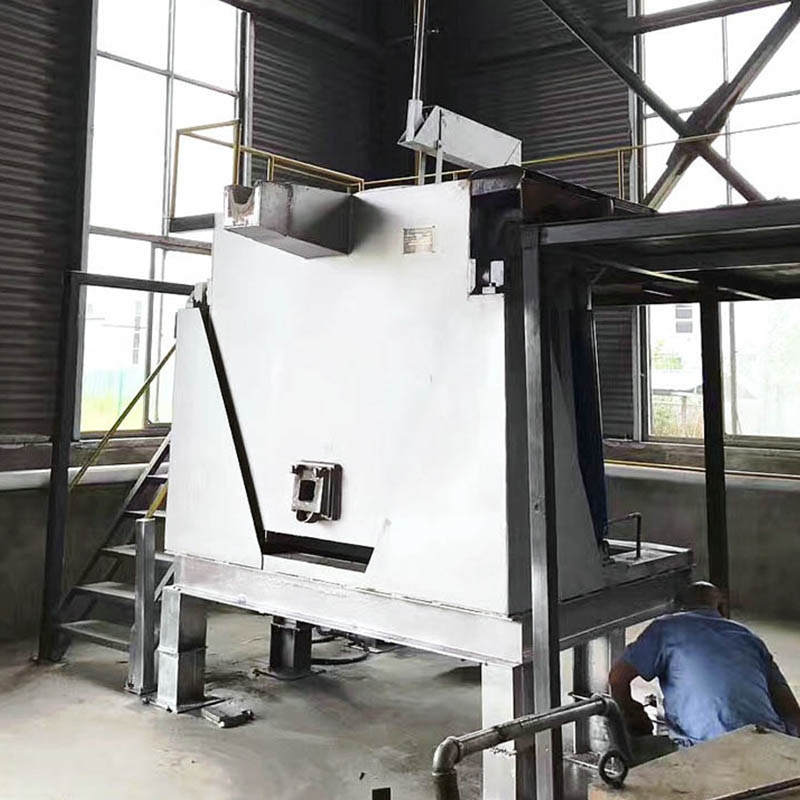
Secondly, corrosion by molten aluminum. Molten aluminum is highly chemically reactive and will gradually penetrate and corrode the crucible wall, especially when the molten aluminum contains alloying elements such as silicon and magnesium, which exacerbates corrosion. This corrosion thins the crucible wall and can contaminate the molten aluminum.
Thirdly, mechanical impact. The impact of metal materials during charging and mechanical operations during slag removal can cause direct physical damage to the inner wall of the crucible, creating notches or cracks. These damaged points will become the origin of failure under high temperature and corrosive environments.
Finally, the thickness of the oxide layer. At high temperatures, an oxide protective layer forms on the surface of the crucible. A moderate oxide layer can slow down corrosion, but an excessively thick oxide layer is prone to peeling due to uneven thermal expansion and contraction, exposing fresh material and accelerating wear; conversely, an excessively thin oxide layer will cause the base material to lose protection.
In summary, extending the lifespan of a crucible aluminum melting furnace requires stable furnace temperature, avoiding drastic fluctuations, standardized operation to reduce mechanical damage, and selecting crucible materials with better corrosion resistance according to the process, while also monitoring the state of the oxide layer.