



NEWS&EVENTS
Home > News&Events > Company news > What heating method is commonly used for rectangular aluminum melting furnaces?
Rectangular aluminum melting furnaces are one of the most widely used and mainstream furnace types in the aluminum alloy smelting industry. They utilize gas (such as natural gas or liquefied petroleum gas) as fuel for combustion heating, and their comprehensive advantages have established their core position in large-scale industrial production.
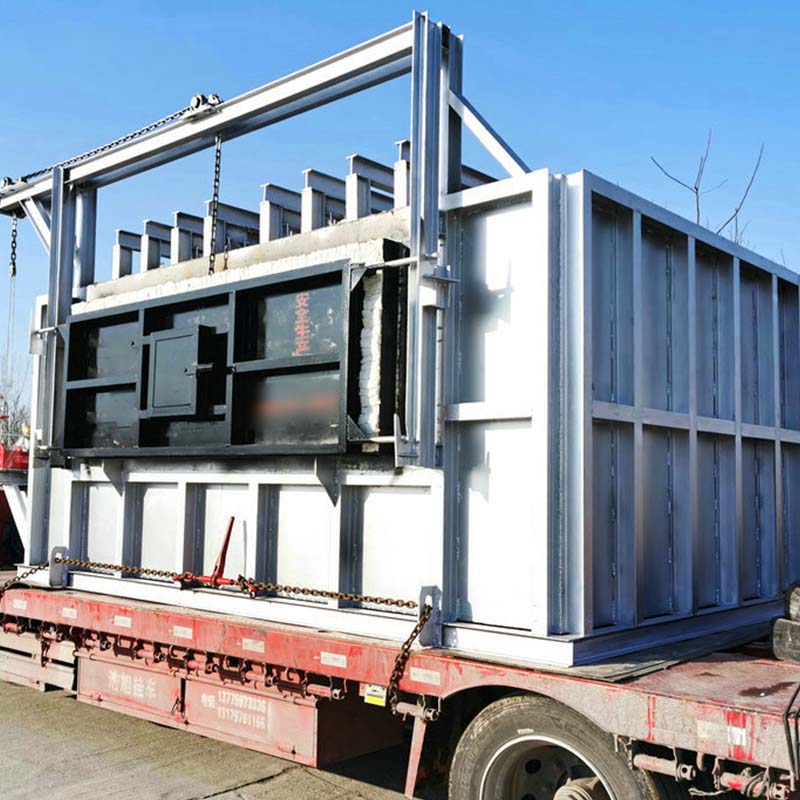
Firstly, gas combustion provides extremely powerful thermal power. Through the array arrangement of multiple high-efficiency burners, a huge amount of heat can be released instantly in the furnace chamber, achieving rapid heating and melting of the aluminum material. This high heat flux density characteristic makes the rectangular gas-fired aluminum melting furnace have a very high production capacity per unit time (melting rate), which is particularly suitable for continuous or large-batch production rhythms, significantly shortening the production cycle and improving overall efficiency.
Secondly, its furnace structure is easy to scale up. The rectangular furnace type has a natural design advantage in terms of increasing volume; by simply proportionally extending the length or increasing the width of the furnace body, melting furnaces with capacities ranging from a few tons to hundreds of tons can be built. This excellent scalability allows it to flexibly match the production capacity needs of different-sized factories, whether for large-scale primary aluminum production or large-scale recycled aluminum recovery, a suitable furnace type can be found.
More importantly, the combination of gas heating and the rectangular furnace chamber perfectly realizes precise control of the thermal process inside the furnace. The burners are usually arranged along one or both sides of the furnace wall, and through an automated control system, the gas-to-air ratio, flow rate, and injection angle of each burner can be precisely adjusted. This allows operators to shape the flame flow direction and temperature field distribution in the furnace chamber as needed: for example, during the charging and melting stages, a long flame, large coverage mode can be used to achieve rapid and uniform heating; during the aluminum liquid holding or refining stage, it can be adjusted to a short flame, gentle heating mode to avoid excessive oxidation and gas absorption of the aluminum liquid, and promote the homogenization of the melt composition and temperature. This ability to control the "shape" and direction of the flame is key to obtaining high-quality aluminum liquid, reducing burning loss and energy consumption.
In addition, gas, as a relatively clean energy source, has combustion products that are easy to handle, and when combined with modern dust removal and waste heat recovery systems, it can meet increasingly stringent environmental protection requirements. Overall, rectangular gas-fired aluminum melting furnaces, with their high power, high production capacity, flexible design, and unparalleled controllability of the internal thermal process, have become a classic and reliable choice for large-scale, high-efficiency, and high-quality aluminum melting production. With continuous advancements in combustion and control technologies, their performance and environmental indicators will continue to improve.