



NEWS&EVENTS
Home > News&Events > Company news > Factors affecting and improving the capacity of scrap copper rotary furnaces
As a key piece of equipment for the recycling and reuse of scrap copper, the capacity of the scrap copper rotary furnace is affected by a variety of factors. Accurately grasping these factors and taking effective improvement measures is of great significance for improving the efficiency of scrap copper recycling and reducing costs.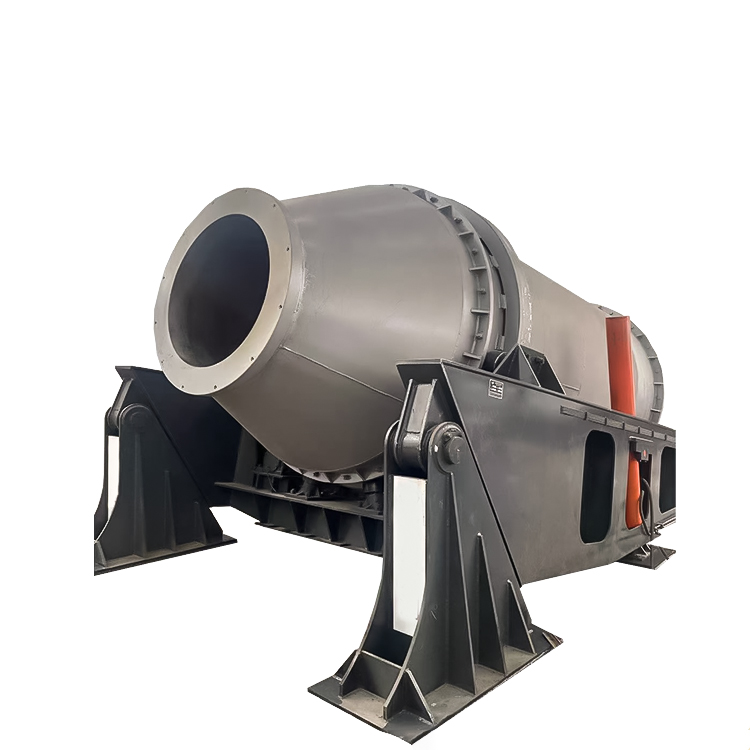
The kiln size is a fundamental factor affecting capacity. A larger kiln volume can accommodate more scrap copper, providing space for large-scale processing and directly increasing the output per batch. Heating power is equally critical; sufficient heating power ensures that the scrap copper is quickly heated to the appropriate reaction temperature, accelerating the reaction rate, shortening the processing cycle, and thus increasing the capacity per unit time. The particle size of the scrap copper is also important. Uniformly sized scrap copper is heated more evenly within the kiln, resulting in a more complete reaction and effectively avoiding incomplete local reactions caused by particle size differences, thus improving overall processing efficiency. Operational continuity also significantly impacts capacity. Continuous and stable operation reduces the number of equipment start-ups and shutdowns, avoiding heat loss and time waste caused by frequent start-ups and shutdowns, ensuring production continuity and efficiency.
To address the above-mentioned influencing factors, the following improvement strategies can be adopted. Increasing the kiln volume is a direct and effective method, increasing the single-batch processing capacity. An automated feeding system enables precise, rapid, and continuous feeding of scrap copper, reducing human error and time intervals, and improving operational continuity and stability. Furthermore, pre-treatment of the scrap copper to remove impurities such as plastics and rubber reduces interference with the reaction, lowers energy consumption, improves reaction efficiency, and indirectly increases production capacity.
By comprehensively considering and optimizing these factors and implementing targeted improvement measures, the production capacity of scrap copper rotary kilns can be effectively increased, promoting the efficient development of the scrap copper recycling industry.