



NEWS&EVENTS
Home > News&Events > Company news > What are the functions of each part of the scrap copper rotary furnace structure?
The rotary kiln for scrap copper is a key piece of equipment in the scrap copper recycling process. Its various components work together to ensure efficient and environmentally friendly smelting of scrap copper. The function of each component is detailed below.
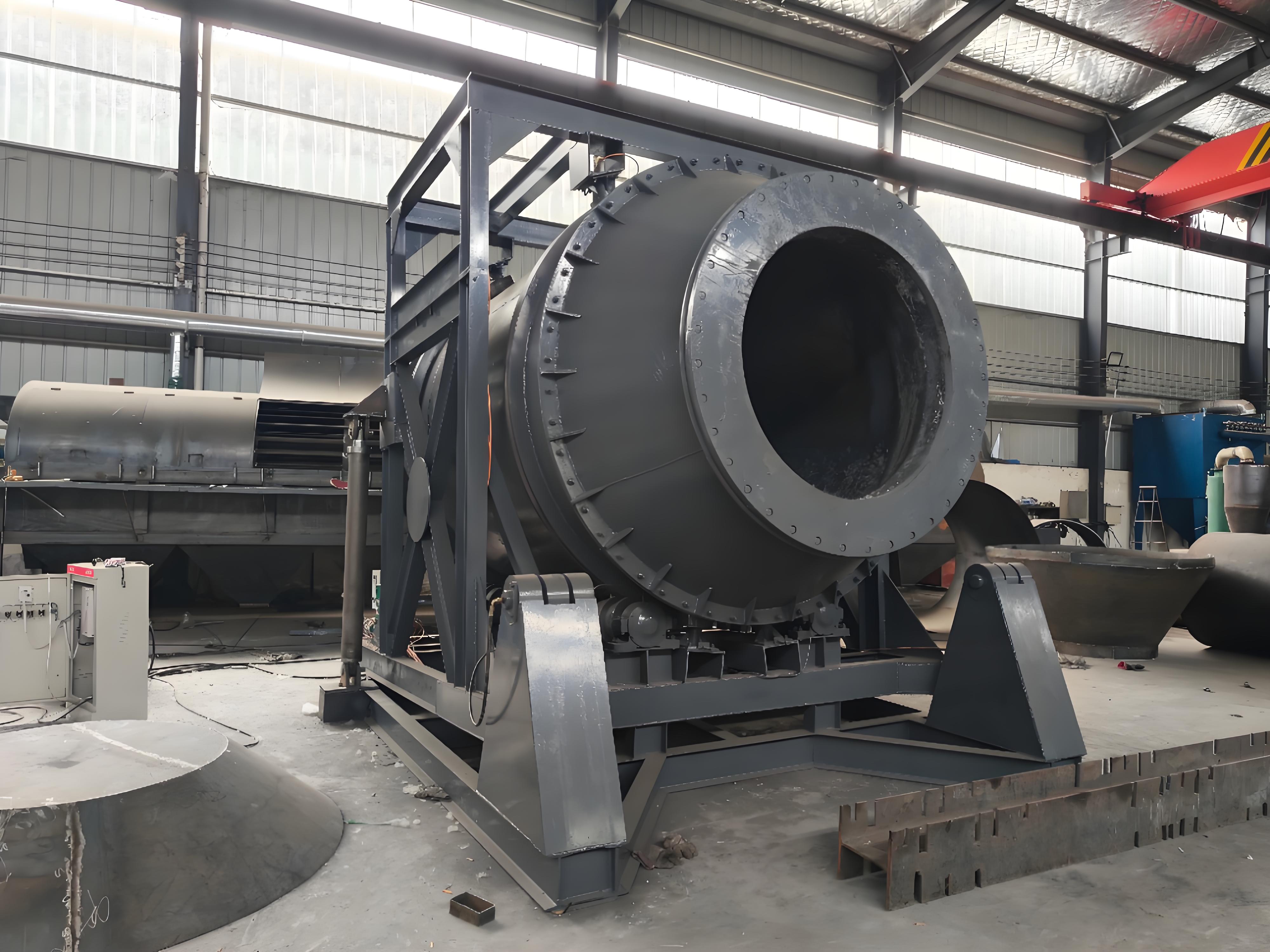
The furnace body is the core load-bearing part of the rotary kiln for scrap copper, lined with refractory material. During the scrap copper smelting process, the temperature inside the furnace is extremely high. The refractory lining can withstand this high-temperature environment, ensuring the stability and safety of the furnace structure. Simultaneously, it effectively reduces heat loss to the outside, improves energy efficiency, and lowers production costs.
The rotary drive device provides power for the furnace body's rotation, precisely controlling its speed and direction. Through the rotation of the furnace body, the scrap copper continuously tumbles and mixes inside, resulting in more uniform heating and preventing localized overheating or undercooling, thereby improving smelting quality and efficiency.
The combustion system is the heat source provider for the rotary kiln for scrap copper. It can be selected from gas, oil, etc., depending on the actual situation. It provides sufficient heat to the furnace to bring the scrap copper to its melting point and melt it, which is a fundamental condition for achieving scrap copper recycling and reuse.
The feeding/discharging system is responsible for the continuous or intermittent feeding and discharging of scrap copper. A well-designed feeding system ensures smooth entry of scrap copper into the furnace, preventing blockages; while the discharging system accurately and safely discharges the molten copper, providing qualified raw materials for subsequent processing steps.
The exhaust system collects the waste gas generated during scrap copper smelting and treats the pollutants to meet environmental emission standards before releasing them into the atmosphere, effectively reducing environmental pollution and achieving green production.
The various components of the scrap copper rotary furnace work closely together to complete the scrap copper smelting task, playing an irreplaceable role in the scrap copper recycling industry.