



NEWS&EVENTS
As a core piece of equipment in copper and copper alloy smelting, the operation of a gas-fired copper crucible furnace directly impacts production efficiency and product quality. Based on structural design and operational characteristics, this equipment is mainly divided into two types: fixed and tilting. The tilting type is further subdivided into center-tilting and front-support hydraulic tilting types.
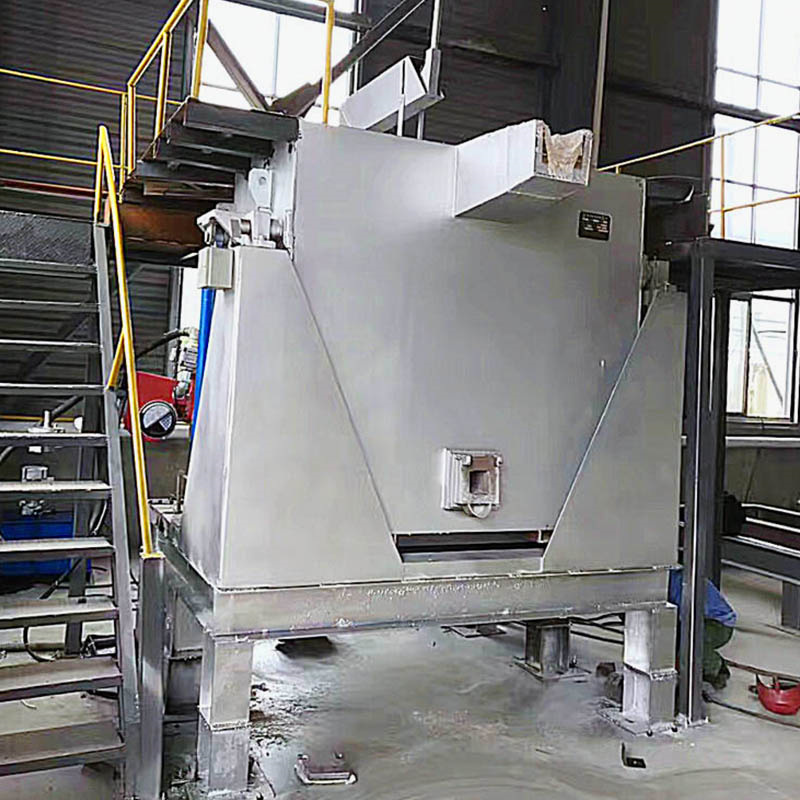
Fixed crucible furnaces are the most basic type, with the furnace body fixed to the ground and the crucible immovable. When unloading, molten copper must be scooped from the furnace opening manually or with mechanical tools, resulting in high operational intensity and safety hazards. This type of furnace has a simple structure and low manufacturing cost, making it suitable for small-batch, intermittent production scenarios, such as small foundries or laboratories. However, its limitation lies in the fact that the position of the molten copper flow changes as the liquid level in the crucible drops, making it difficult to control pouring accuracy, and the high-temperature working environment has a significant impact on the health of operators.
Tilting crucible furnaces use mechanical devices to tilt the furnace body or crucible, significantly improving operational convenience. Among them, the center-tilting type uses the center of the furnace body as a fulcrum, tilting it manually or with simple machinery. However, it suffers from limitations in tilting angle and large fluctuations in the copper molten flow position, and has been gradually replaced by more advanced structures. The front-fulcrum hydraulic tilting type uses a hydraulic fulcrum at the front of the furnace body, driving the furnace body to tilt smoothly within a 90-degree range via a hydraulic system. This design ensures that the copper molten metal always flows out from a fixed position, improving casting accuracy and reducing contact between the copper molten metal and air, thus lowering the risk of oxidation inclusions. For example, our company's 1000KG tilting gas-fired aluminum melting furnace uses a front-fulcrum hydraulic tilting structure, equipped with an imported temperature controller and a solid-state module PID temperature control system, achieving a temperature control accuracy of ±1℃, stably meeting the needs of aluminum alloy die casting, gravity casting, and other scenarios.
In practical applications, the tilting furnace type has become the mainstream choice for copper melting gas-fired crucible furnaces due to its advantages such as safe operation, high efficiency, and stable product quality.