



NEWS&EVENTS
Home > News&Events > Company news > Construction and material requirements of refractory layer for copper melting crucible furnace
The construction of the refractory material layers in a copper melting crucible furnace is meticulous, typically employing a multi-layered structure, built sequentially from the outside to the inside.
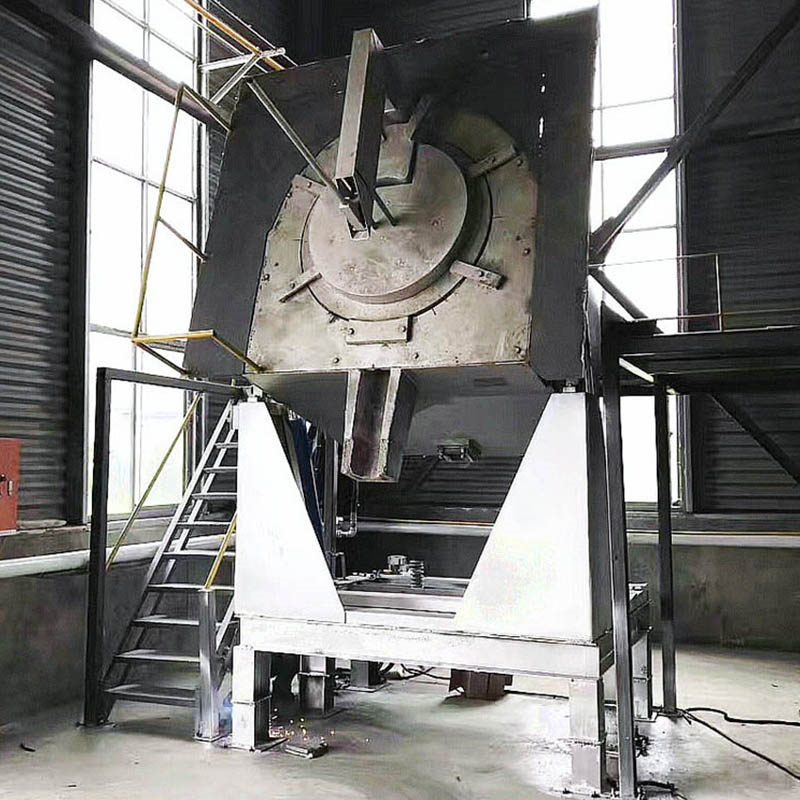
The outermost layer is the shell, generally made of steel, which supports and protects the internal refractory materials, providing a structural framework for the entire furnace and ensuring its stability.
Inside the shell is a layer of lightweight insulating bricks. This layer effectively reduces heat loss, improves the furnace's thermal efficiency, reduces energy consumption, and provides excellent thermal insulation.
Further inward is a layer of high-alumina bricks. High-alumina bricks have high refractoriness and good resistance to chemical corrosion, capable of withstanding certain high-temperature environments. They provide basic refractory protection for the furnace, preventing excessive external heat transfer while also resisting a certain degree of high-temperature erosion.
The innermost layer consists of magnesia bricks or corundum bricks, etc. Magnesia bricks exhibit good resistance to corrosion from molten copper and slag at high temperatures, allowing them to withstand prolonged exposure to the high temperatures of molten copper without rapid damage. Corundum bricks, on the other hand, possess higher refractoriness, mechanical strength, and wear resistance, maintaining good integrity even when subjected to the turbulent impact of molten metal during smelting.
Strict requirements are placed on the furnace lining materials. They must possess high mechanical strength to withstand the pressure inside the furnace and the impact of molten metal; high density prevents gas and slag penetration, avoiding damage to the internal structure; and good volumetric stability ensures minimal dimensional changes under repeated high-temperature exposure, preventing cracking and ensuring long-term stable operation of the furnace, meeting the high-efficiency and long-lasting working requirements of copper melting crucible furnaces.